The Year in Review 2025
I hope this year in painting has been good for you! It's been a long and winding road, but I'm excited to share some of the highlights from my busy year in the studio. I always feel enormously blessed to be able to create my paintings and send them out into the world. Over the past many years, I have established long-term relationships with some wonderful galleries. I had two exhibitions this year, one at the Hidell Brooks Gallery and another at the Carrie Haddad Gallery. My calendar was full, dates were set, and this is always great impetus for making a lot of work.
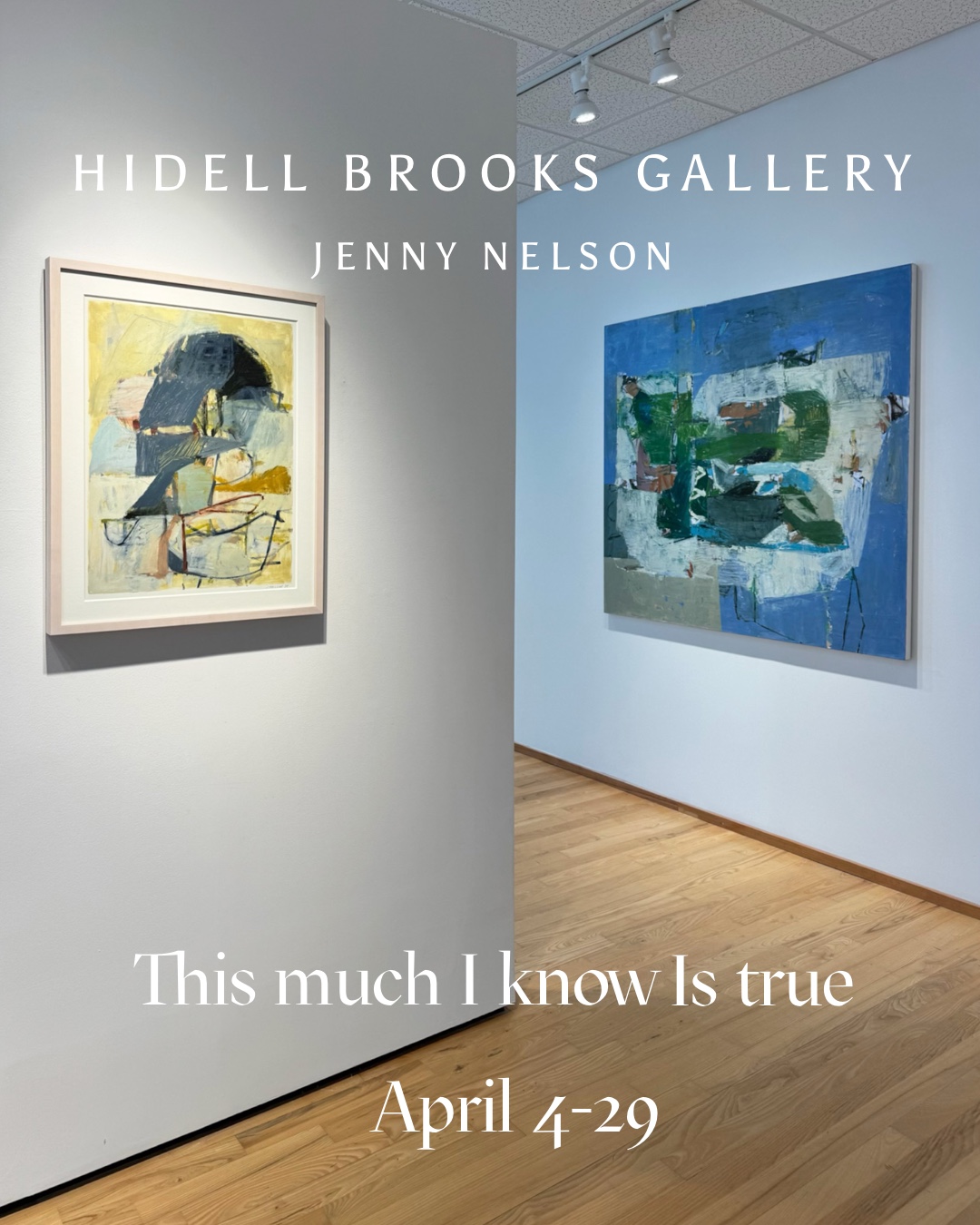
I created about a dozen new works for the Hidell Brooks show, This Much I Know Is True. Most were paintings on canvas, but others were works on paper from my ongoing "Workstation" series. These looser, open ended pieces are created from observations made around the studio, and then somewhat deconstructed. Drawing with the brush, these vibrate somewhere between painting and drawing in a way that can feel almost unfinished and exploratory.
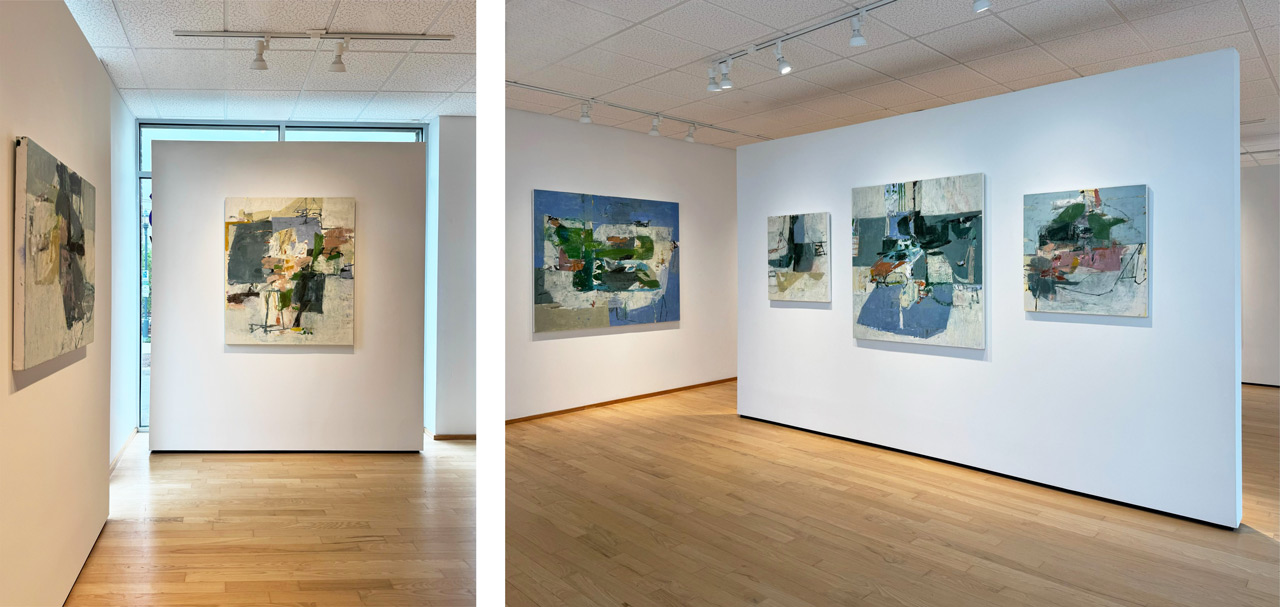
It's always a joy to see the work curated so beautifully in the gallery. Many times pieces are hung side by side in ways that I could not have anticipated, creating new relationships that didn't exist in the studio. The outcomes of my paintings are always unexpected. Without a preconceived idea, they evolve through a kind of call and response. A collaboration between myself and the materials. A conversation starts that has a beginning and an end, but everything in between is unpredictable.
The process that started as a wild party ends up as a contemplative, carefully edited composition, involving precise modifications, while hopefully leaving the life force in tact.
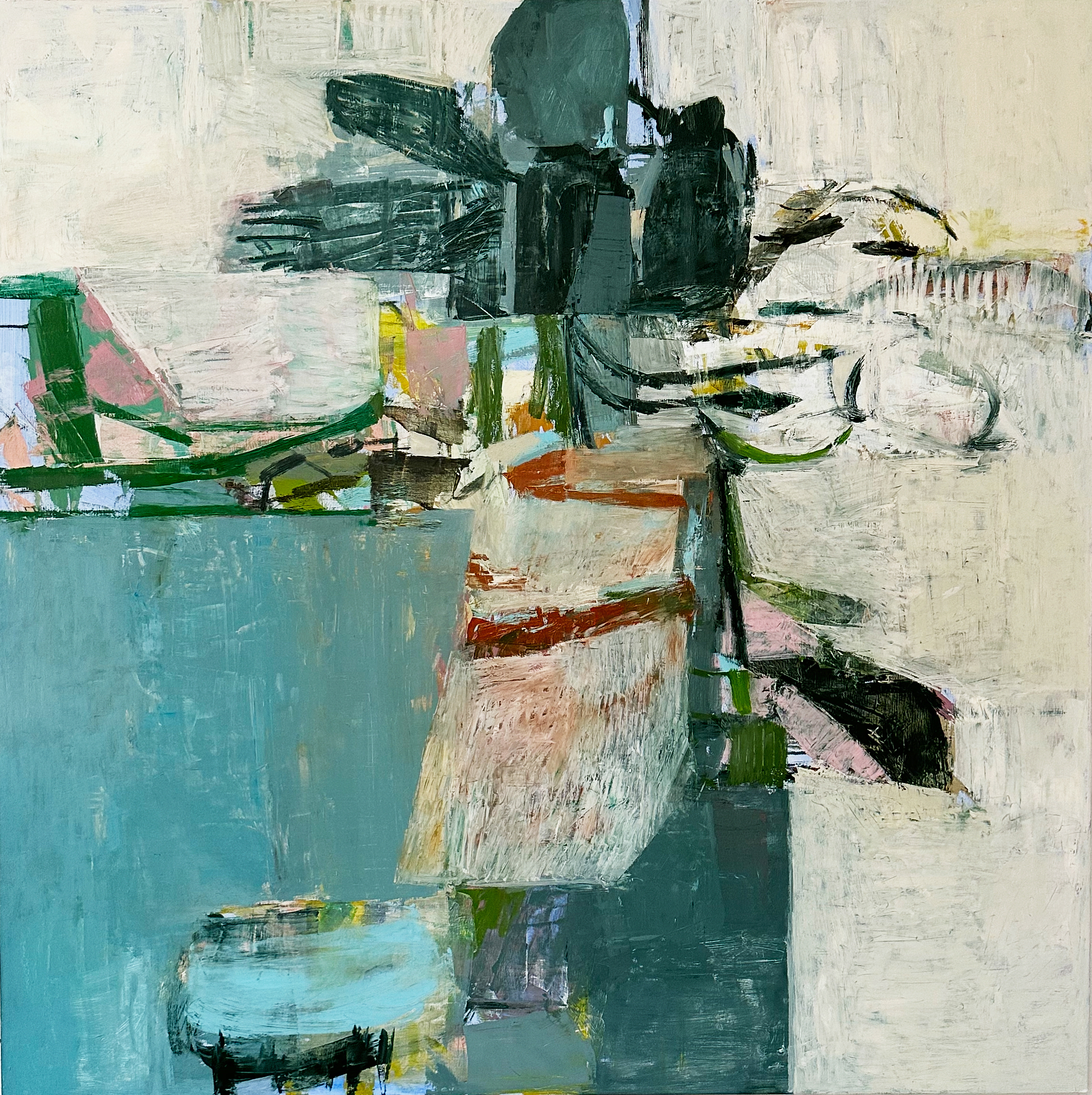
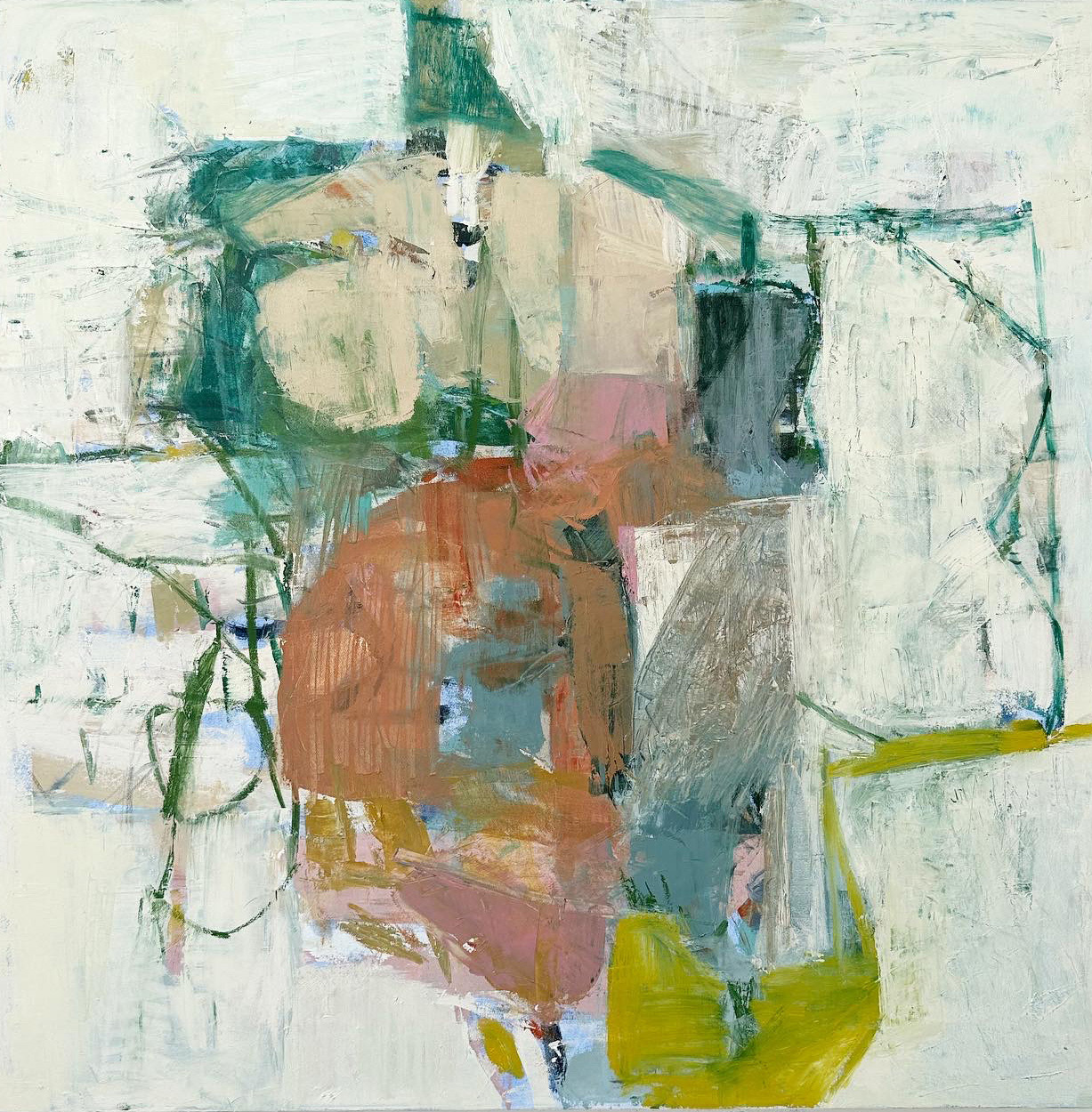
Wild Heart, 48x48 oil on linen
I love having a date on the calendar that I am working towards, but preparing for a show has so many components both logistically and artistically! Collecting materials, setting goals, contemplating the space, documentation, gallery communications, packing and shipping. All of these activities are interspersed with the flow of creating the paintings, staying in the zone, and committing to studio time. My focus is on all these tasks simultaneously, hopefully culminating in a connected body of work that is stimulating to myself and others!
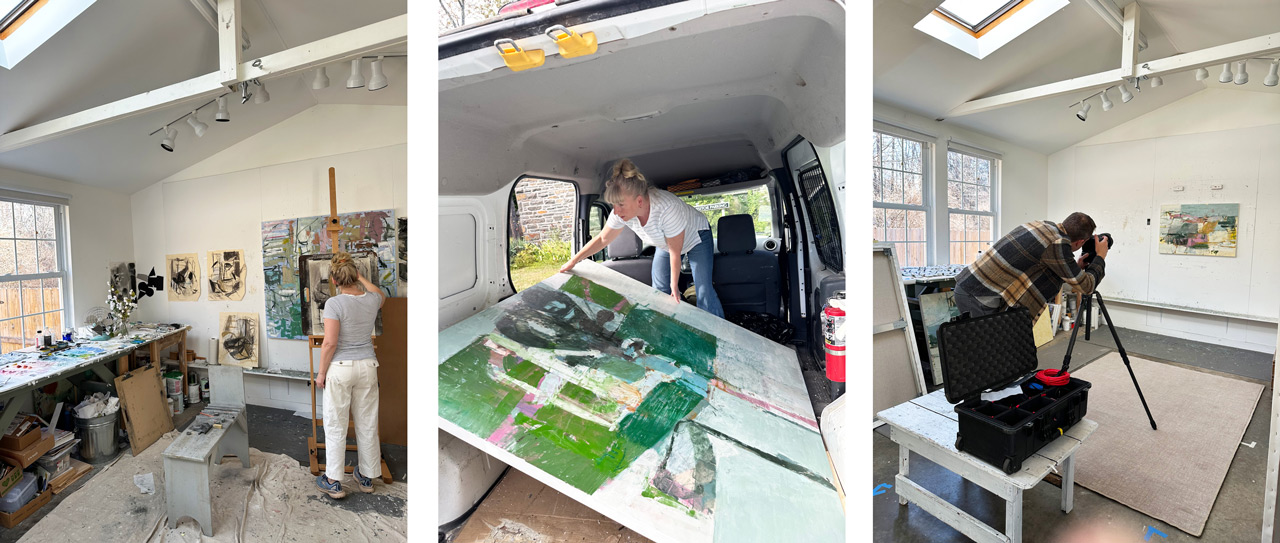
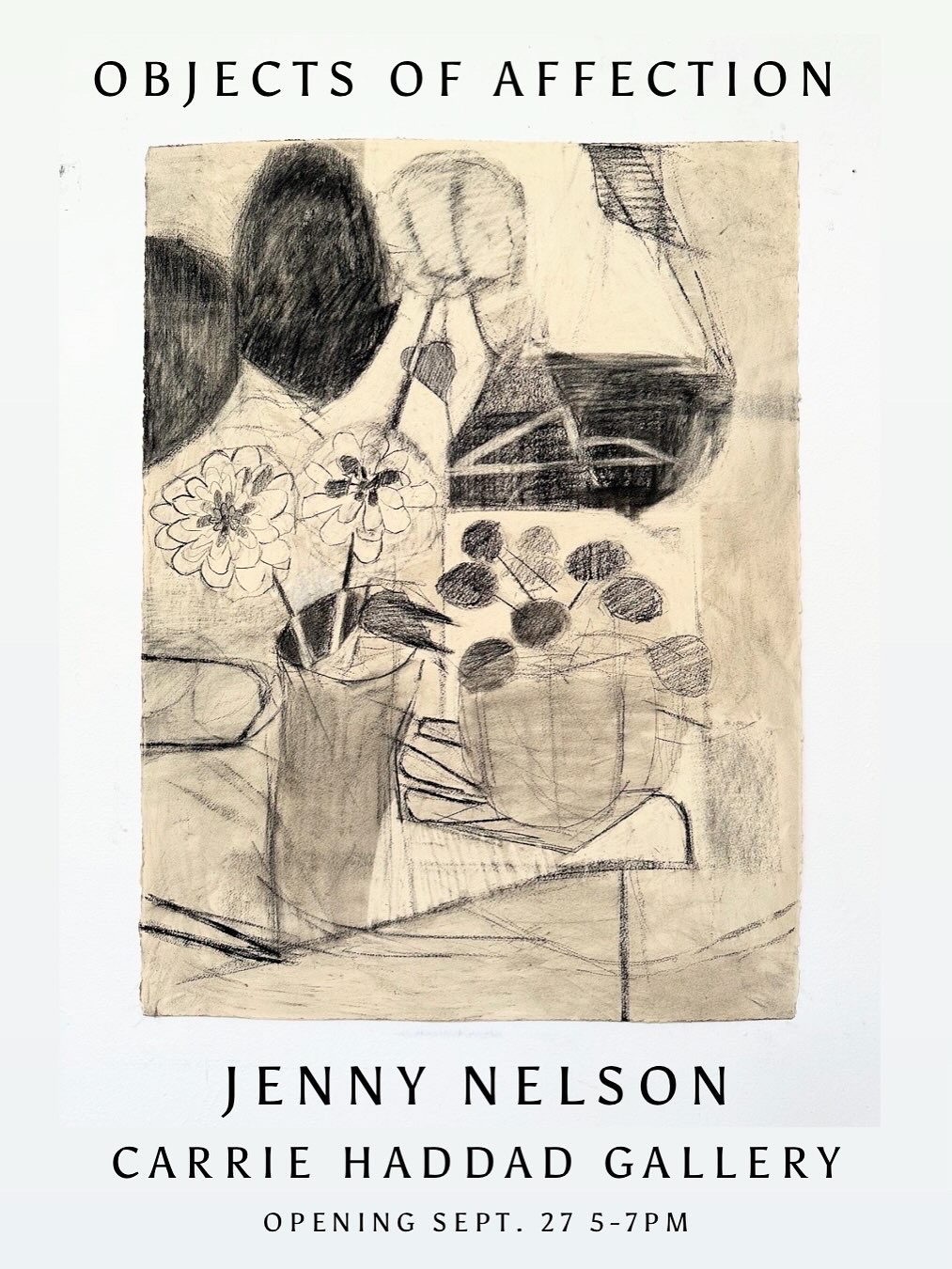
The second show this year was at the Carrie Haddad Gallery in Hudson, NY, titled "Objects of Affection". I had a clear vision for this exhibition. I wanted to create a series of large charcoal drawings from life. Drawing has always been the foundation of my abstract works, and I wanted to make a direct connection.
For these works, I set up a still life as a reference. But behind the flowers on my table, I began creating a group of cut papers that spread out along the wall. I got very involved in the creation of this wall collage, which became more and more elaborate with tape and multiple shapes. These abstract elements found their way into the drawings and added another layer of complexity to these charcoal pieces.
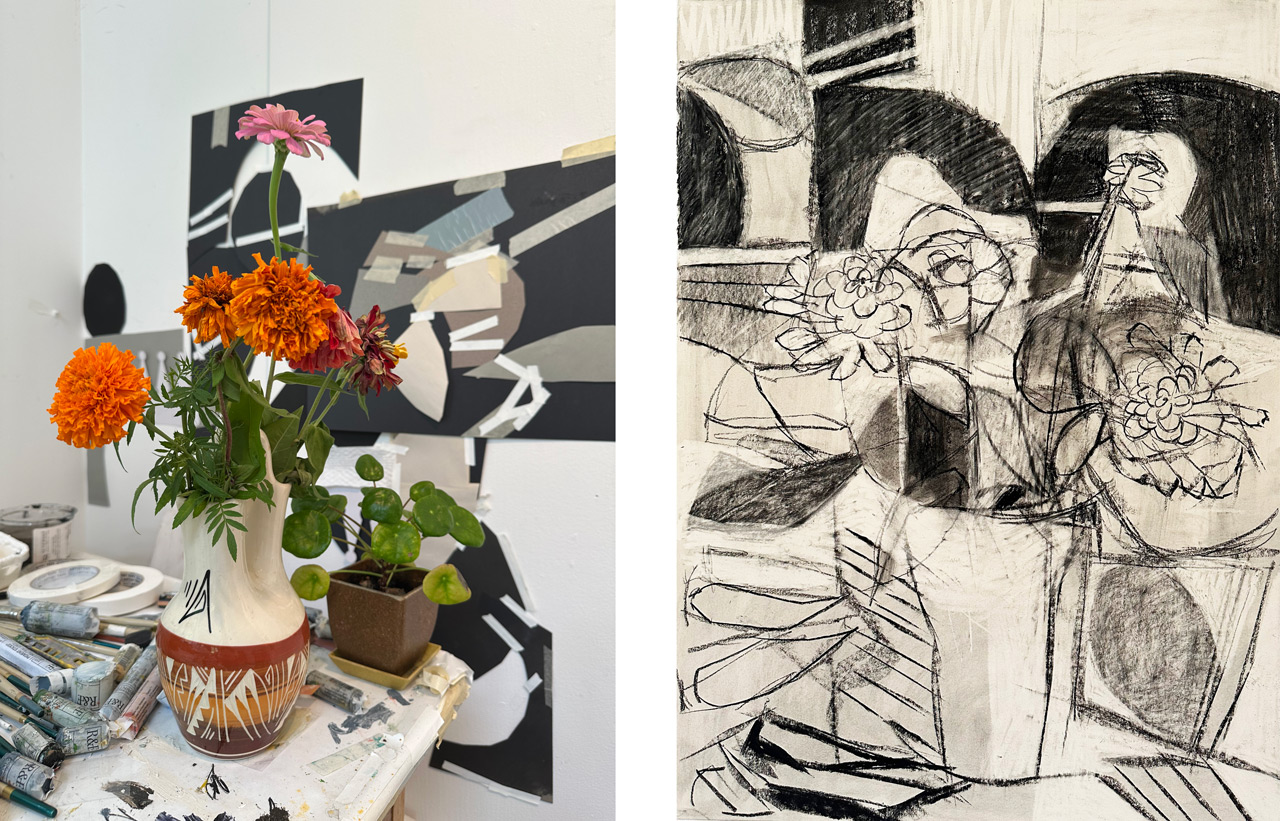
Drawing Summer 1, charcoal on Strathmore paper 30 x 22 in.
Applying paint is sensitive, but charcoal is hypersensitive. The slightest pressure or smudge with the fingertips, and a drawing can shift from recognizable imagery to a grouping of magical, abstracted marks. In these drawings, the objects remained somewhat intact, but at other times they disappeared, retaining only volume and values. The wall collage that worked its way in, created a mysterious assortment of dark and light forms that the flowers could coexist with.
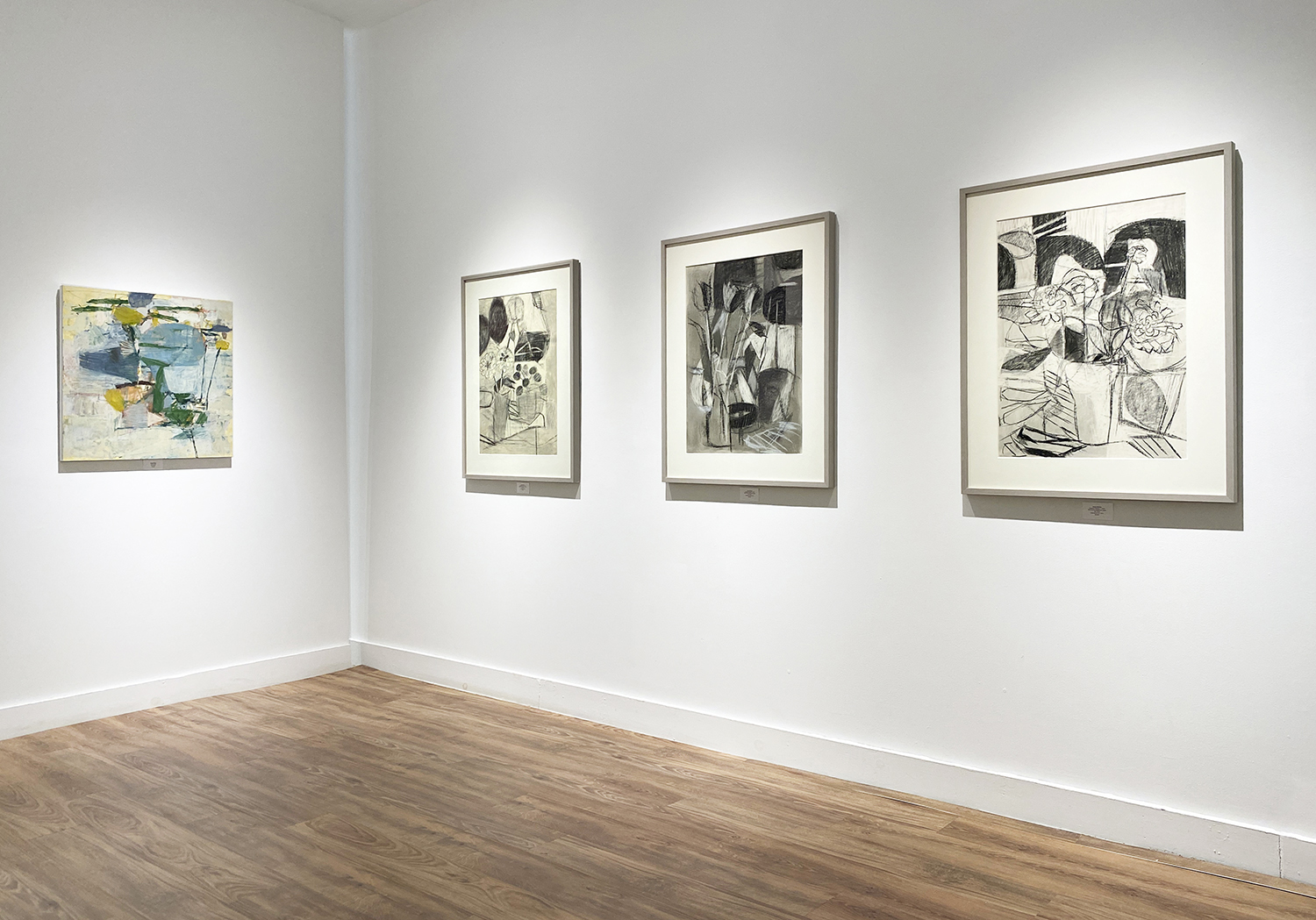
The Drawing Summer series and Golden, 30x30 oil on canvas
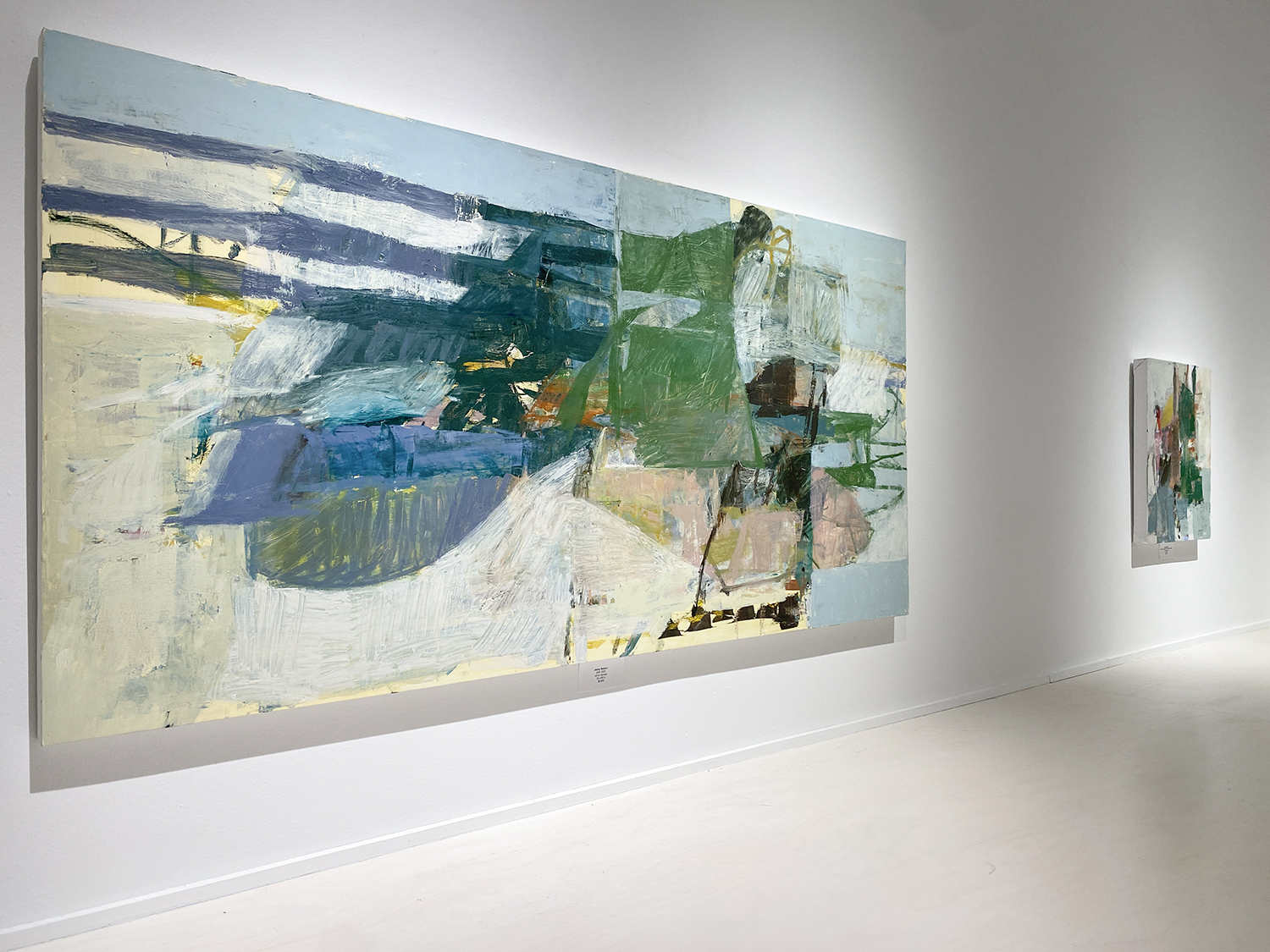
Drift, 30x60 oil on linen, and What Do I Know of This Place #19, oil on canvas
I also found some time this summer to see some great art. I arrived at Storm King Art Center on a particularly gorgeous day! Storm King is a 500-acre outdoor museum located in New York’s Hudson Valley, featuring large-scale sculpture and site-specific commissions under the open sky. This place deserves more than a day trip with hundreds of pieces to see including works by Alexander Calder, Mary Frank, Arthur Gibbons, Andy Goldsworthy, Adolph Gottlieb, Barbara Hepworth and Maya Lin just to name a few.
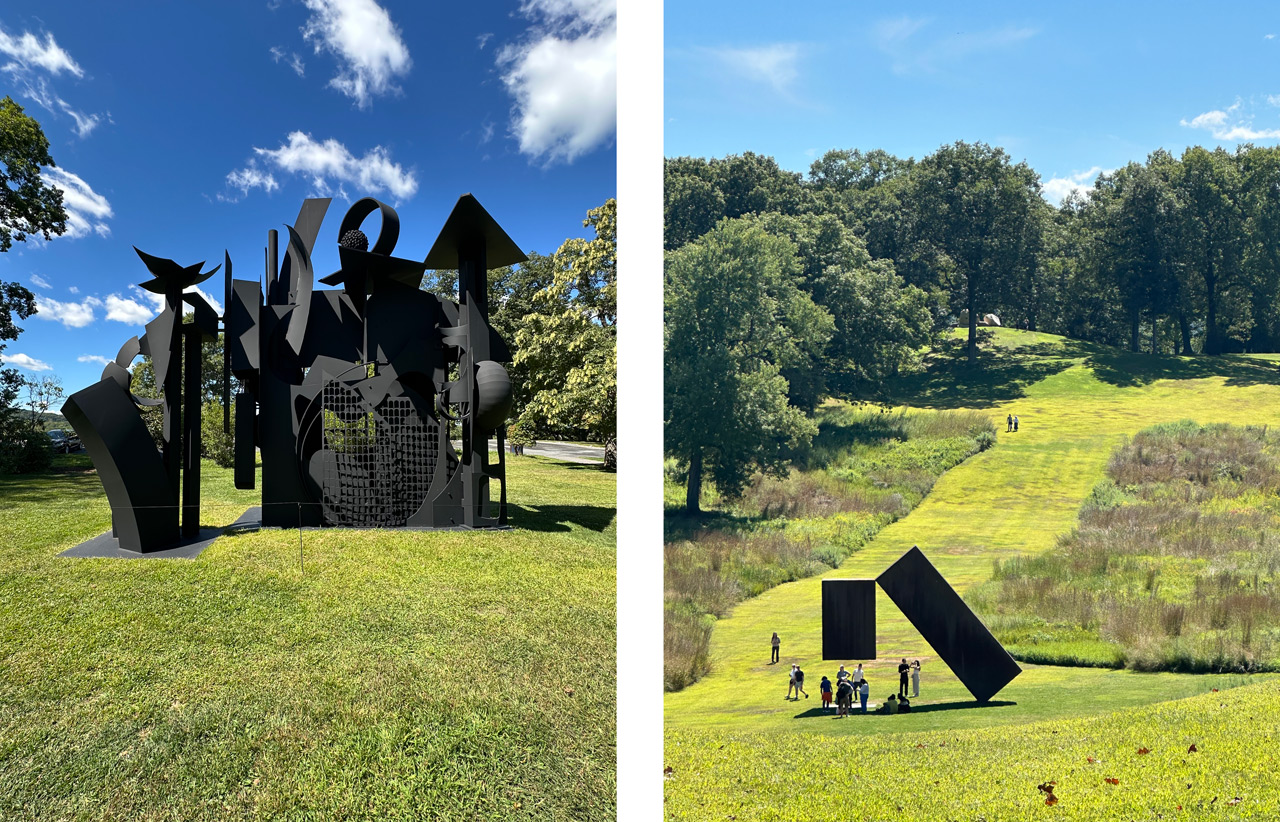
Louise Nevelson, City on the High Mountain, 1983
Painted steel. Menashe Kadishman, Suspended, 1977
Weathering steel
And here are some of my favorite books from this year! How Painting Happens (and why it matters) by Martin Gayford, with chapters like; Starting, finishing and carrying on, Making space and Taking flight with Miro. Chaim Soutine: Genius, Obsession and a Dramatic Life in Art, by Celeste Marcus; a book that offers a compelling history of the artist, taking us from his early days in eastern Europe to his life in Paris among other artists such as Chagall and Modigliani, to his death in France during the German invasion. How to Read Paintings, by Christopher P. Jones is a slim edition sharing a group of captivating works, with lessons in looking and art appreciation.
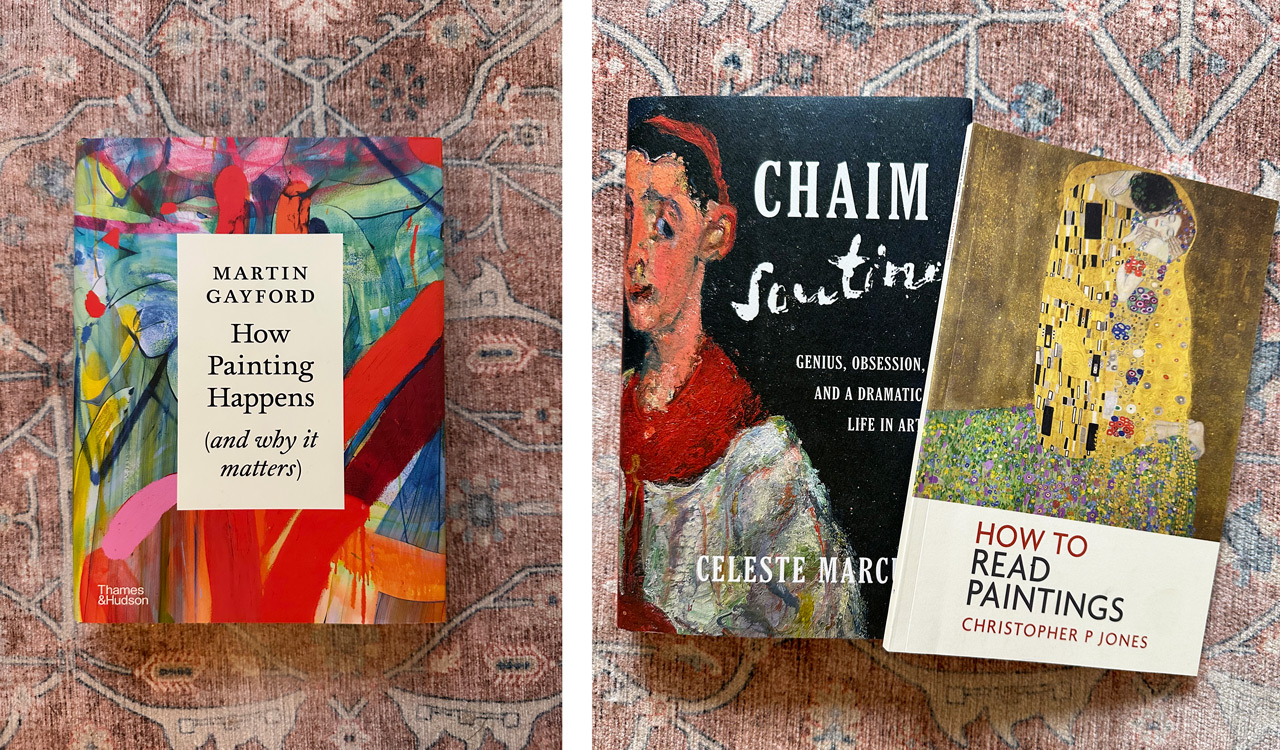
From How Painting Happens (and why it matters): "...draws on a trove of conversations conducted over more than three decades with artists including Frank Auerbach, Gillian Ayres, Frank Bowling, Cicily Brown, Peter Doig, Lucian Freud and more...we hear the personal reflections of these artists on their chosen medium; how and why they paint; how they practice; the influence of fellow painters; and how they find creative sustenance and inspiration in their art."
I love this book! I love the way it feels in my hands, the subjects it covers and the deep dive inside painters minds, hearts and hands. With my focus on drawing this year, I especially enjoyed chapter 14, 'Drawing in Color.'
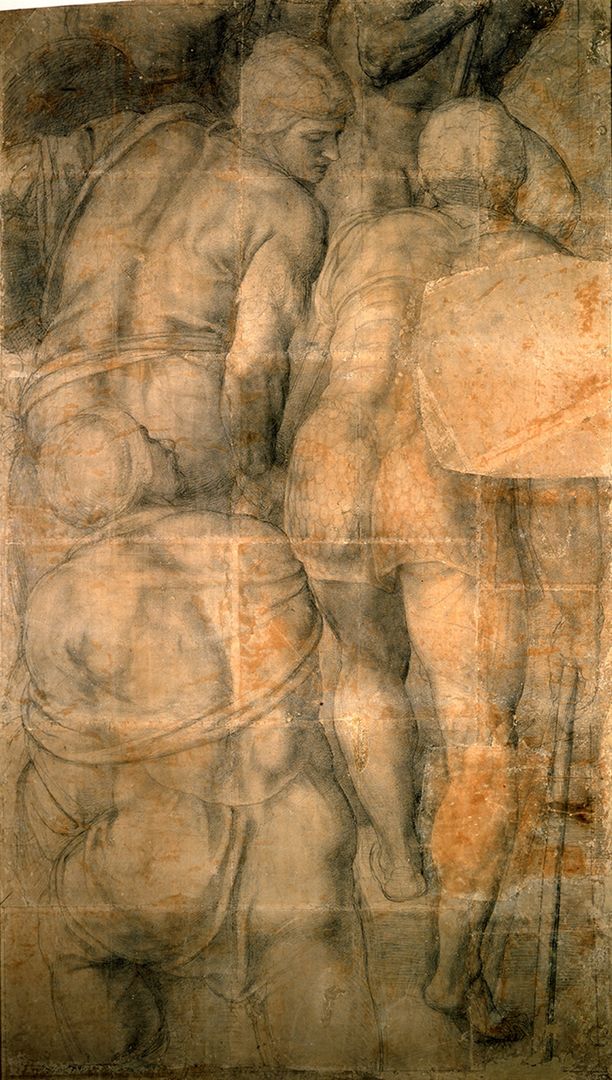
Michelangelo, Roman Soldiers, chalk on paper 1542
From How to Read Paintings, the author describes his experience taking the time to look longer at a Rothko. " ...Then, at a certain point, a strange thing began to happen: as my eyes sunk into the image, my field of vision started to shift. The colors of the painting began to swarm and pulsate. I saw new colors being born, as if the layers of paint were revealing themselves to me. It probably sounds odd to say it, but the object appeared to come alive. The bands of color began to blend, and beneath them fresh tones started to emerge. Perhaps it was the genius of Rothko or perhaps my eyes were inventing something new. I didn't think to question it. I was simply grateful to my teacher for making me push my attention span longer than a few seconds so I could see beyond the surface glance...I like to explore things that have a propensity to ripen, deepen and unfold. This is especially important with paintings, since they are objects that have been specifically made to be experienced and reflected on. I often think the test of a good painting is if it can be returned to again and again and again-or looked at for long periods and still be interesting."
This long stare is something I mention often in my classes. It is equally as important as putting paint on the canvas. Learning how to look longer and more deeply is a pivotal practice for good painting.
From Chaim Soutine, Genius, Obsession, and a Dramatic Life in Art, "...Though he was granted entry at the École des Beaux-Arts in 1913 and studied in the atelier of Fernand Cormon (just as Van Gogh and Toulouse-Lautrec had before him), his true education took place at the Louvre. He devoted himself to Rembrandt, Chardin, and Courbet, who whispered in his ear while he stood before his easel...La Ruche, Soutine's first home in Paris, was a near mythological place..."
As a long time admirer of Soutine's wild paintings, I was very excited to receive this book. One of my favorite passages was the description of Soutine's first studio in the historic studio building, La Ruche, or the Beehive. It was constructed by a renowned, and hugely successful sculptor Alfred Boucher who bought at auction structures that were sold off after the World Fair of 1900. A building size octagonal wine rotunda, statues of costumed women, and a grand iron gate. The combination of these structures were dismantled and then reassembled in a hodgepodge of structures which then became La Ruche.
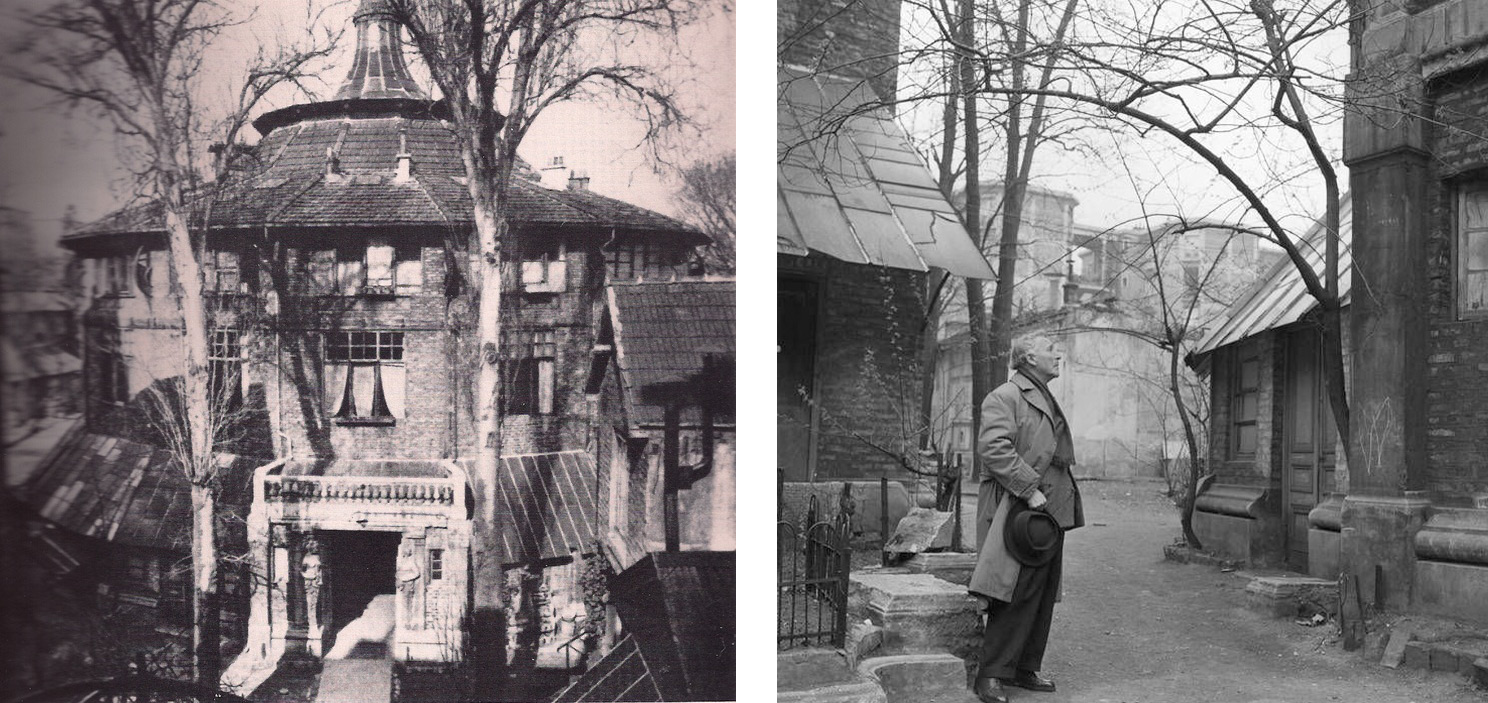
La Ruche and Chagall looking up at his studio.
"The eight-sided building does indeed resemble a beehive. Visitors may still climb the same winding wooden steps Soutine once hobbled up and down, all the way to the compact, sunlight-flooded studio in which Chagall worked on the top floor all those years ago."
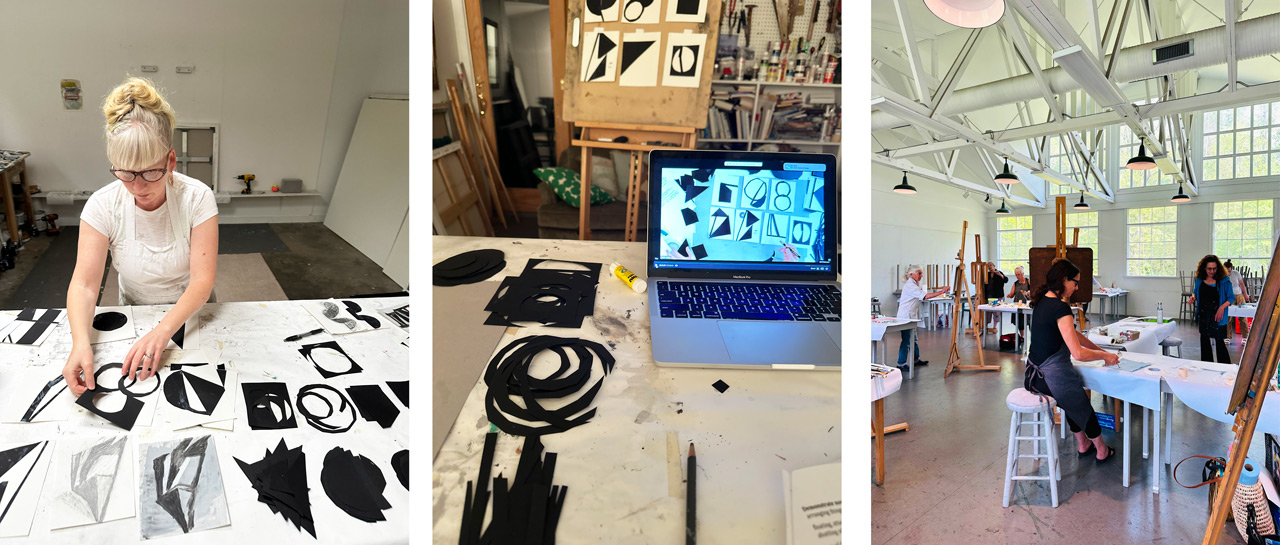
I'm not just obsessed with painting, shape making and composition in my own work. Throughout the year, I'm constantly thinking about my students. I'm always inventing new and better ways to convey the fundamental aspects of abstract painting. This year brought in many new and returning students to my in-person classes at The Woodstock School of Art, and my online course Exploring Abstraction has now welcomed well over 2000 students from around the globe.
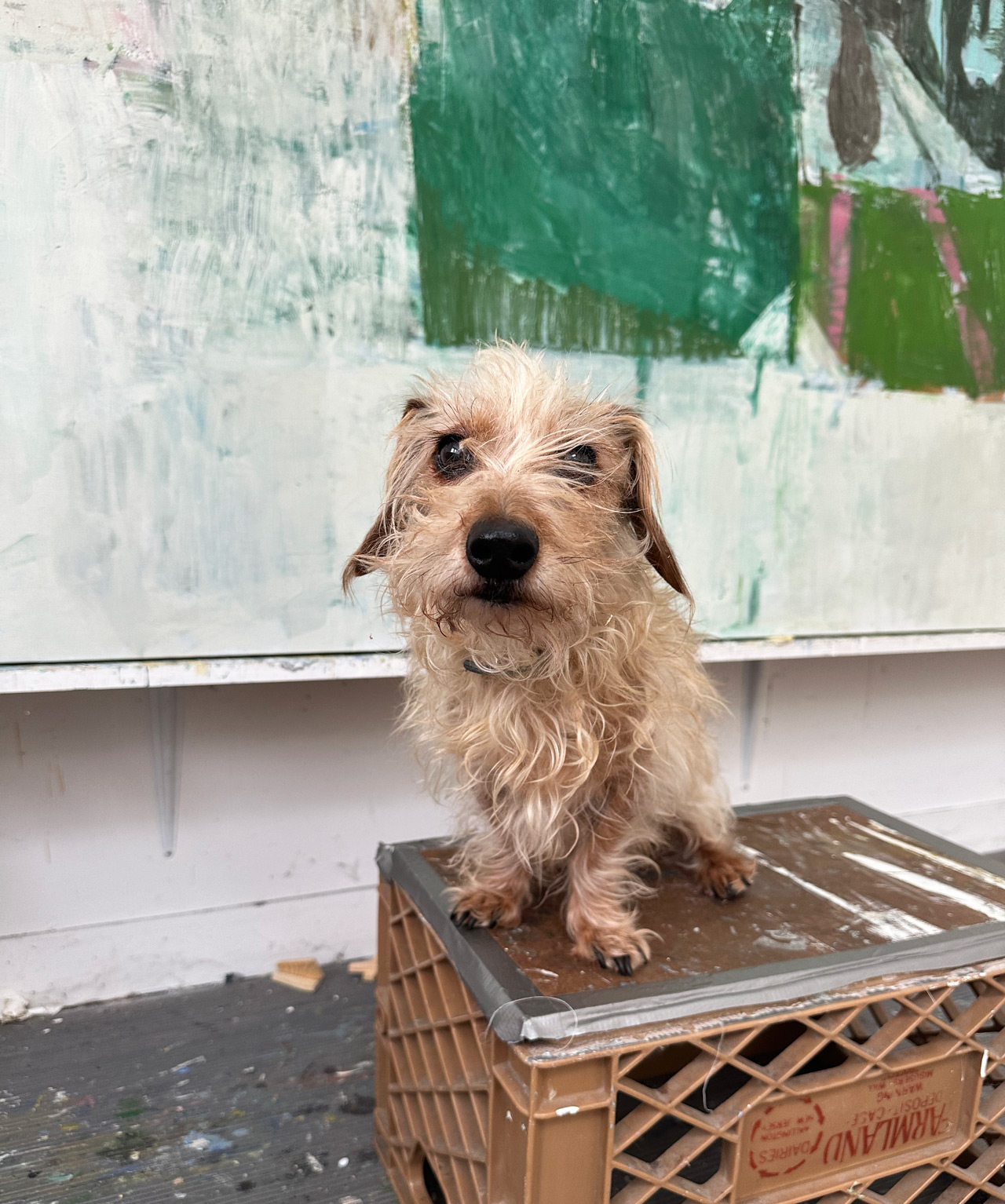
Last but not least, my faithful studio companion, Blue. No matter the ups and downs of the creative process, this little guy brightens the day. Happy New Year!
"To paint is to love again."
—Henry Miller
Join my monthly newsletter and never miss a post
Each month I share explorations of master artists' works, elements of abstraction, and behind-the-scenes of my own painting journey, delivered to your inbox.