Dose of Beauty #6
Flowers are universal symbols of beauty. They give us a sense of comfort, love, and affection.
Flowering plants have evolved into around 400,000 species, producing blooms of different shapes and colors that compete with one another for the attention of butterflies, bees and a plethora of other insects. They also strongly beckon the attention of humans.
Many of the most famous artists in history painted their fair share of flowers. Over the centuries, artists have captured the rich symbolism of flowers, tracing the meanings of roses, irises, tulips, poppies and more. Depending on the historical timeframe, a single flower can represent reproduction or decomposition, purity, promiscuity, or love.
As one of the most easily accessible and comforting subject matters, artists have depicted blooms in every way possible. Flowers have been portrayed and interpreted throughout history, perhaps beginning with the lotus flower in ancient Egypt. From there we can jump forward to religious imagery and all modern movements, including expressionism, impressionism, surrealism, cubism, abstraction, pop art and so on. With paint, petals can be pushed beyond their boundaries, pulled with a loaded brush, or simplified, sharpened, and contained with hard edges.
Below are a few images to welcome spring. All of these works can be gazed upon to restore our hearts and souls. To exhale, and as Picasso so famously said "...wipe away the dust of everyday life."
Below, Flowers and Cigar Box by Richard Diebenkorn, won the grand prize at the San Francisco Art Association Members Show at the M.H. de Young Museum, San Francisco, in 1956.
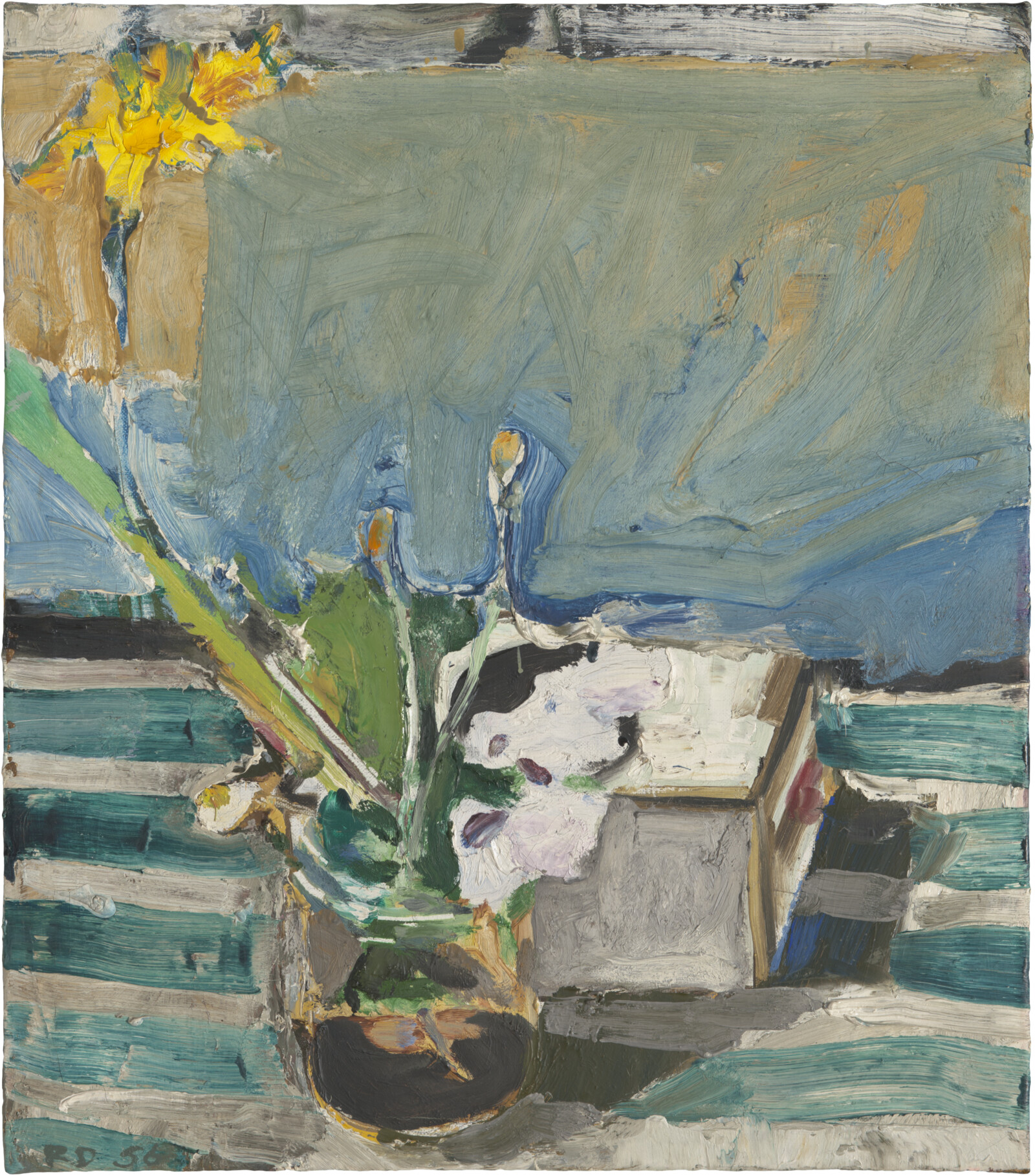
Richard Diebenkorn Flowers and Cigar Box 17 3/4 x 15 5/8 in. oil on Canvas 1956
In Klimt's electric Bauerngarten, we see the close-up rendering of a flower garden with tight perspective and rhythmic patterns. The burst of colors is joyous in its exaggerated profusion. A predominantly complimentary red-green palette makes the pedals pop forward, while the blue bunch in the middle stop us in our tracks.
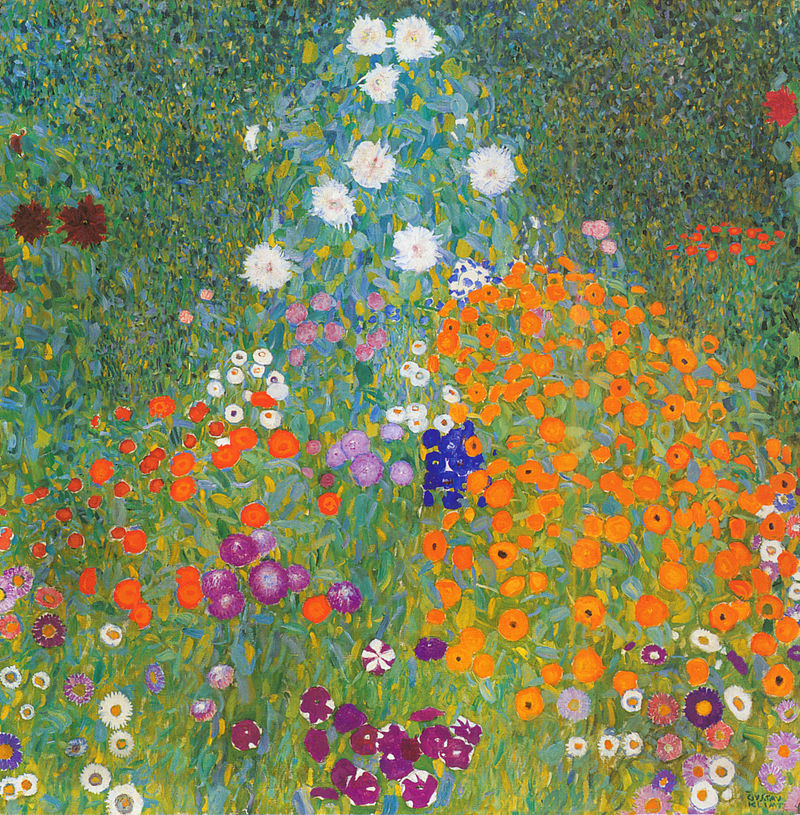
Gustav Klimt Bauerngarten, oil on canvas 43 1/4 by 43 1/4 in. 1907
Enchanting in its simplicity, Lois Dodd, presents a fresh and simplified image of a fading amaryllis. Framed in a grey, muted window, we place ourselves inside the intimate space, looking outwards. The saturated colors of stem and bloom lead us up and center, a single flower folded over asking for our attention.
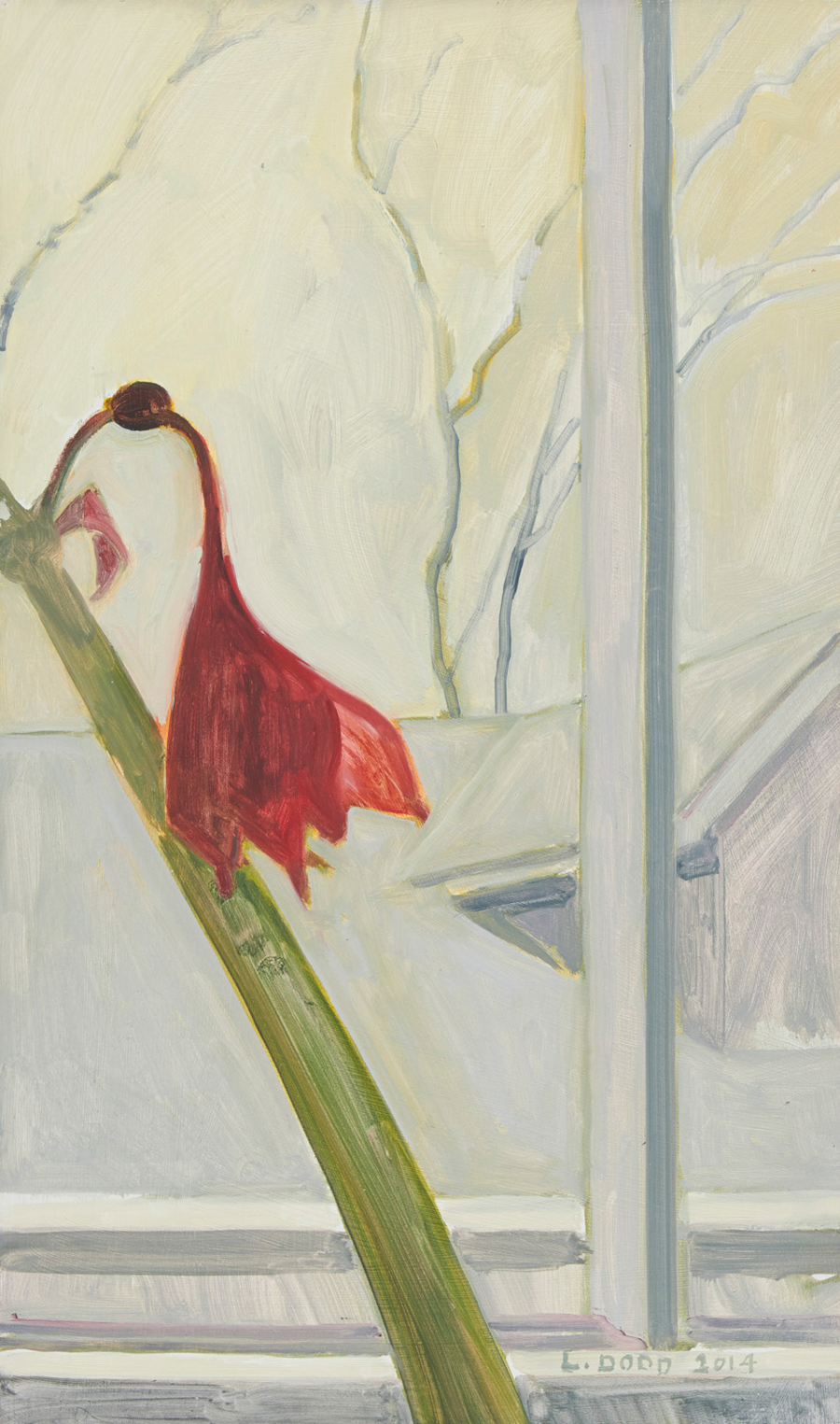
Lois Dodd, Fading Amaryllis, 2014, oil on Masonite, 38 × 23 in.
In this silkscreen by Amy Sillman, Iris overlap and reach upwards. Layers of transparent purples build upon one another to create an in-depth, sentimental examination of pedals and stems.

Amy Sillman, Flowers for TzK, Silkscreen and hand wiping, 45.7 x 30.5 cm
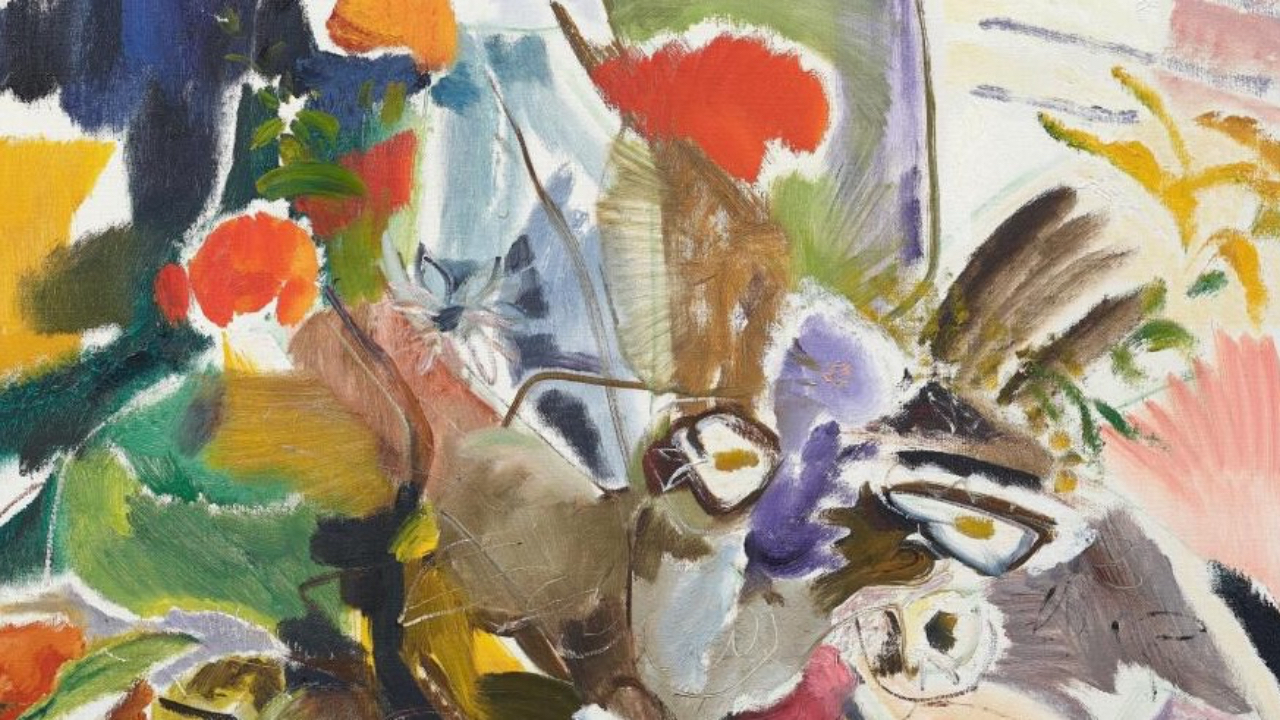
In his loose, fluid painting style, Ivon Hitchens' work bursts forth with flower power. Irregular forms of expressive color abut one another across the entire canvas. Orange lilies, vases, clusters of leaves cover a table top. The flowers mix in amongst nooks and crannies and expressive line, all tied together by a coherent painterly language. Joyous.
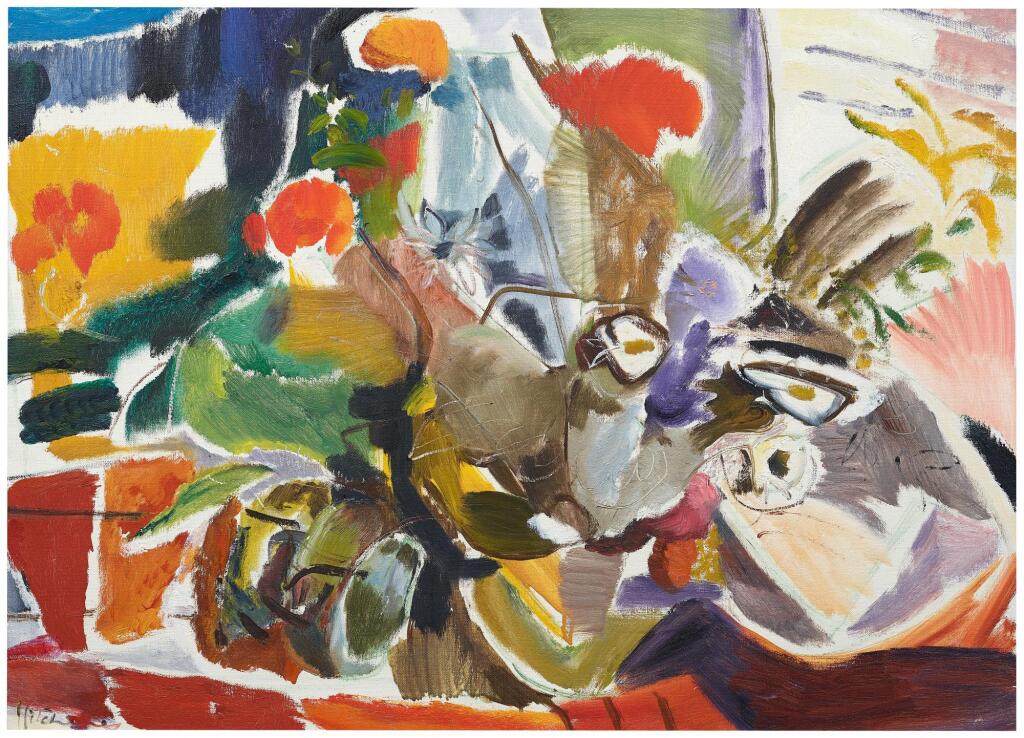
Ivon Hitchens, Orange Lilies and White Daisies, oil on canvas 24½ by 33¾in.
mid-1940s
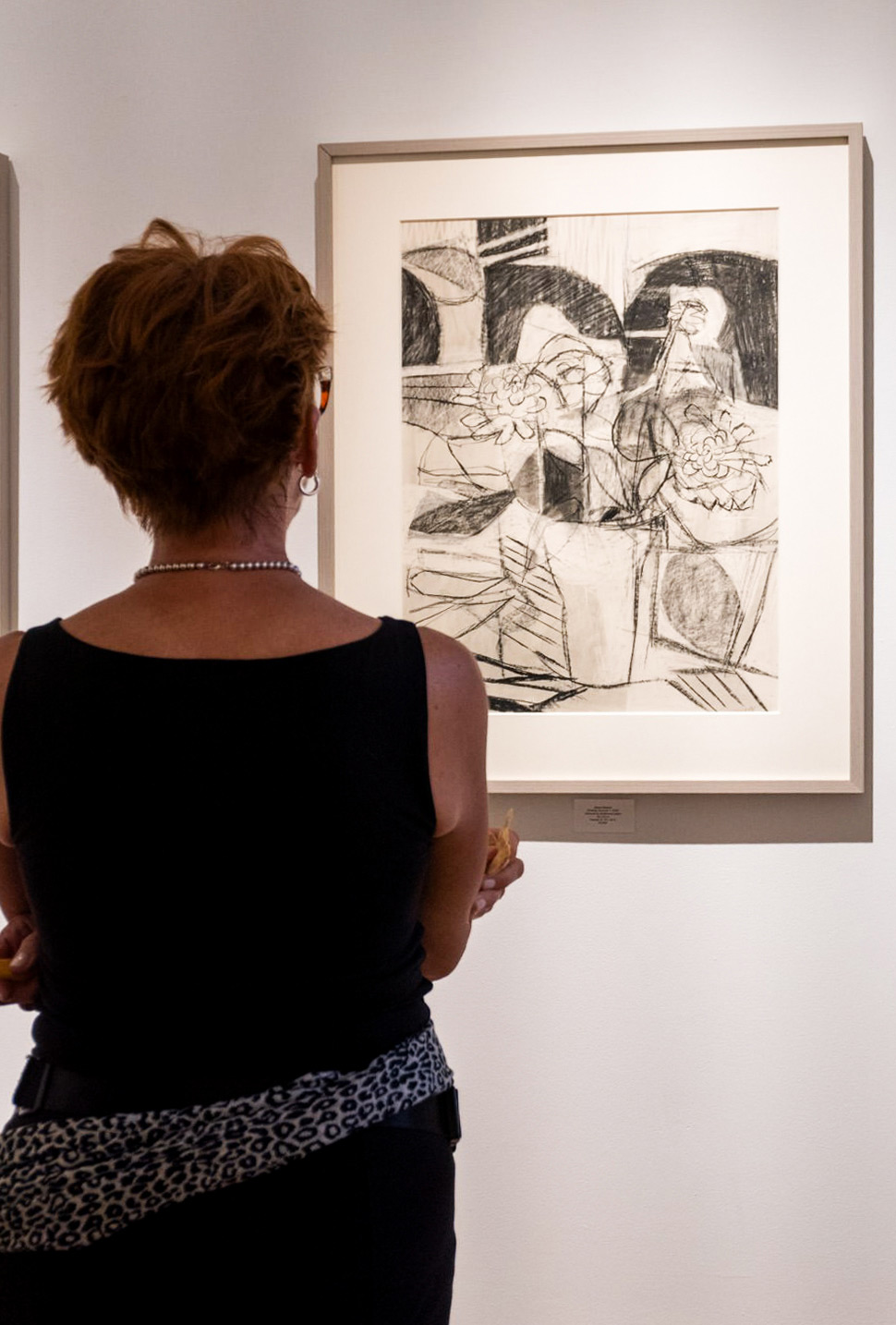
Ellsworth Kelly may have become most well know for his geometric abstraction; hard-edged and minimalist painting, but his paintings weren’t purely abstract. Many pieces were representations of forms he found in nature. Attracted to the simple shapes of the objects he saw around him, he made basic sketches of forms that interested him such as windows, buildings, and various natural elements such as flowers, trees, and leaves. Whatever subject he sketched, he reduced the objects of his interest to their simplest forms.
In the 1960's he made a series of drawings of various fruits, flowers and vegetable gardens. In this drawing titled Wild Grape, he reduces the plant to its simplest forms. In his 1962 painting Red White, he takes that exact form in red, and inverts it onto a white canvas.
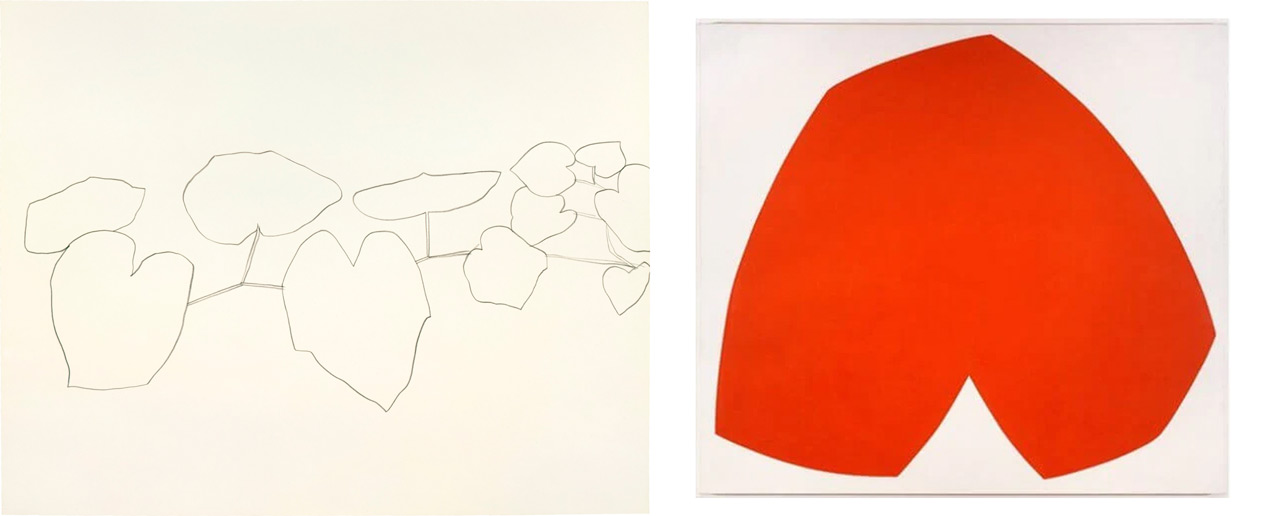
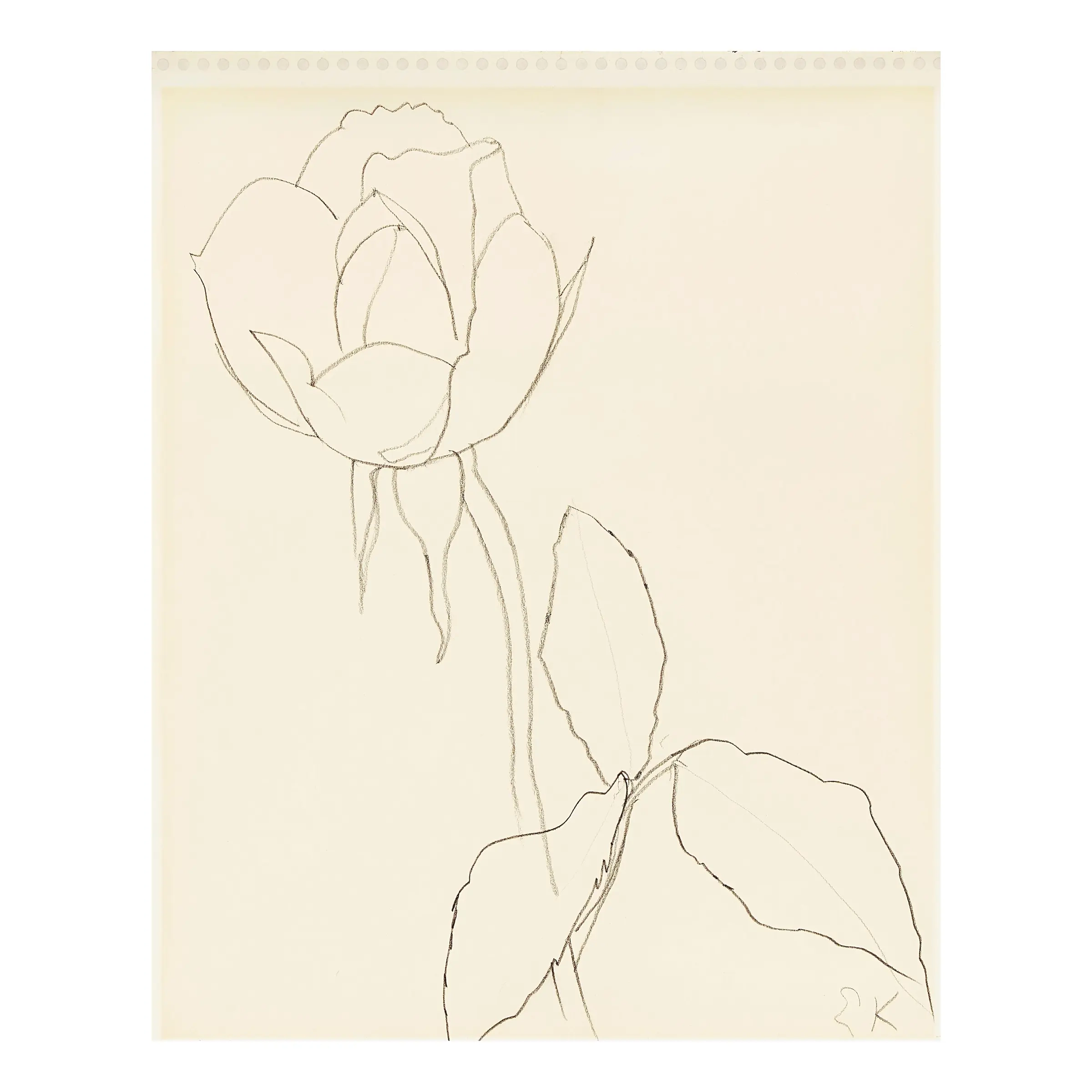
Ellsworth Kelly, Flower, graphite on paper 9 7/8 by 7 7/8 in. 1989
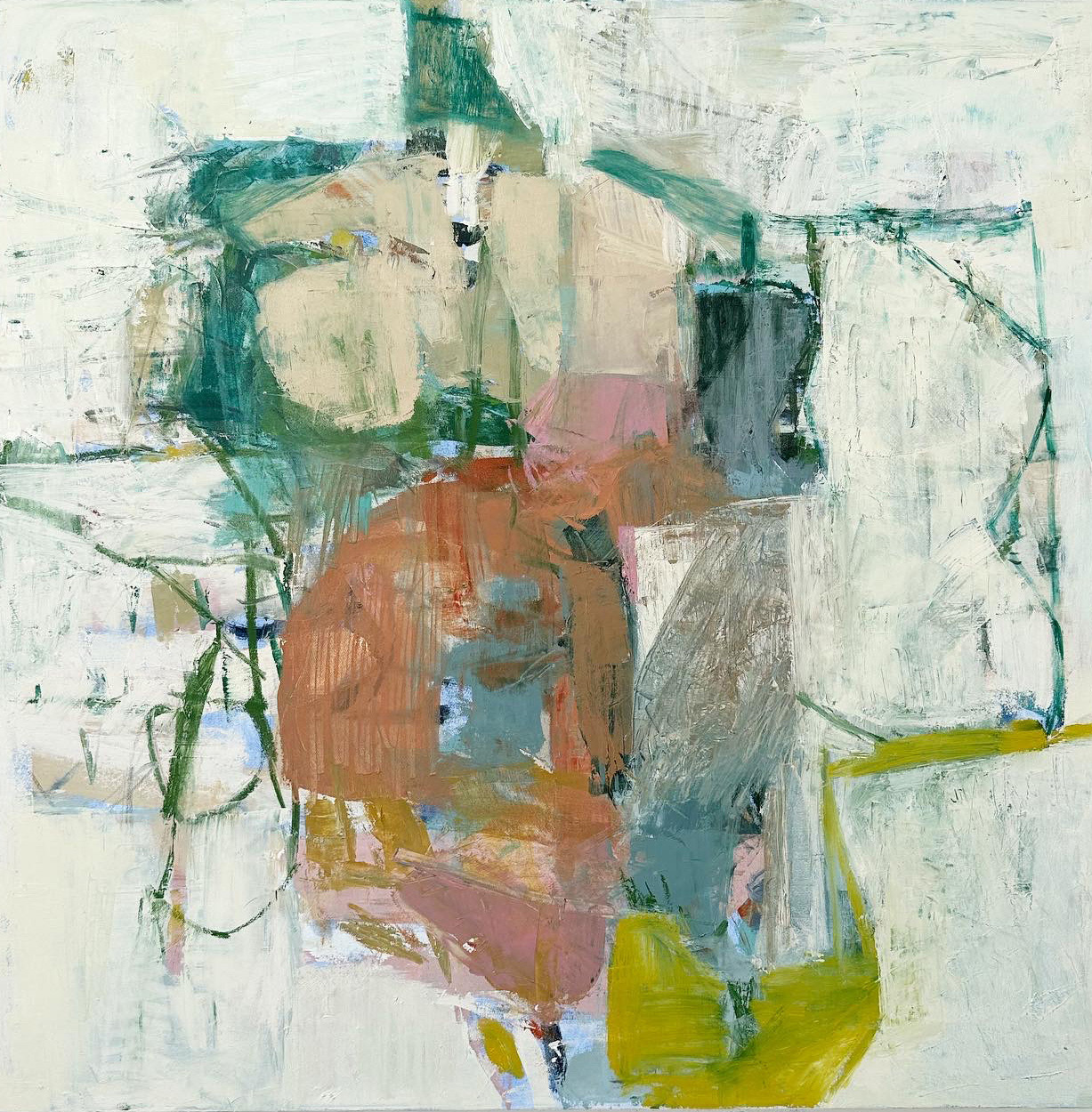
It is my natural inclination to create abstract compositions. However, I've always drawn from life and find that working loosely from observation creates a soothing antidote to the challenge of organizing chaos. Recently, I found myself creating a series of paintings and drawings from bouquets gifted during a challenging time. The comfort was palpable and the work spilled out without question or self doubt.
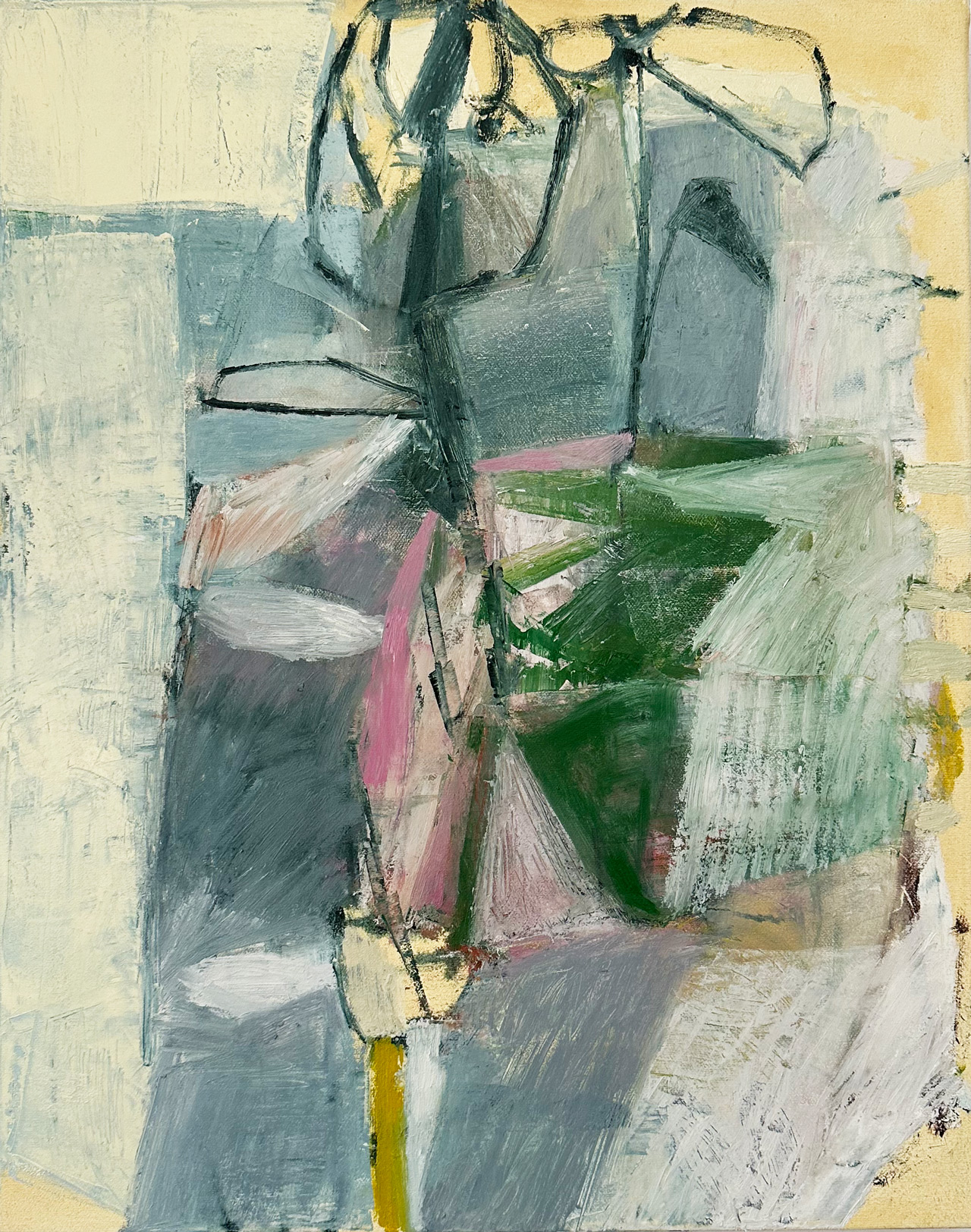
Jenny Nelson, Small Flower #3, oil on canvas 20x16 in. 2026
Below is a subdued and elegant painting by Aubrey Levinthal, titled Rose Bouquet. Rendered in a muted palette of scumbled greys, it is layered with transparencies and punctuated with delicate lines. The limited palette and horizontal positioning of the flowers creates a work of emotional nuance; quiet and introspective.
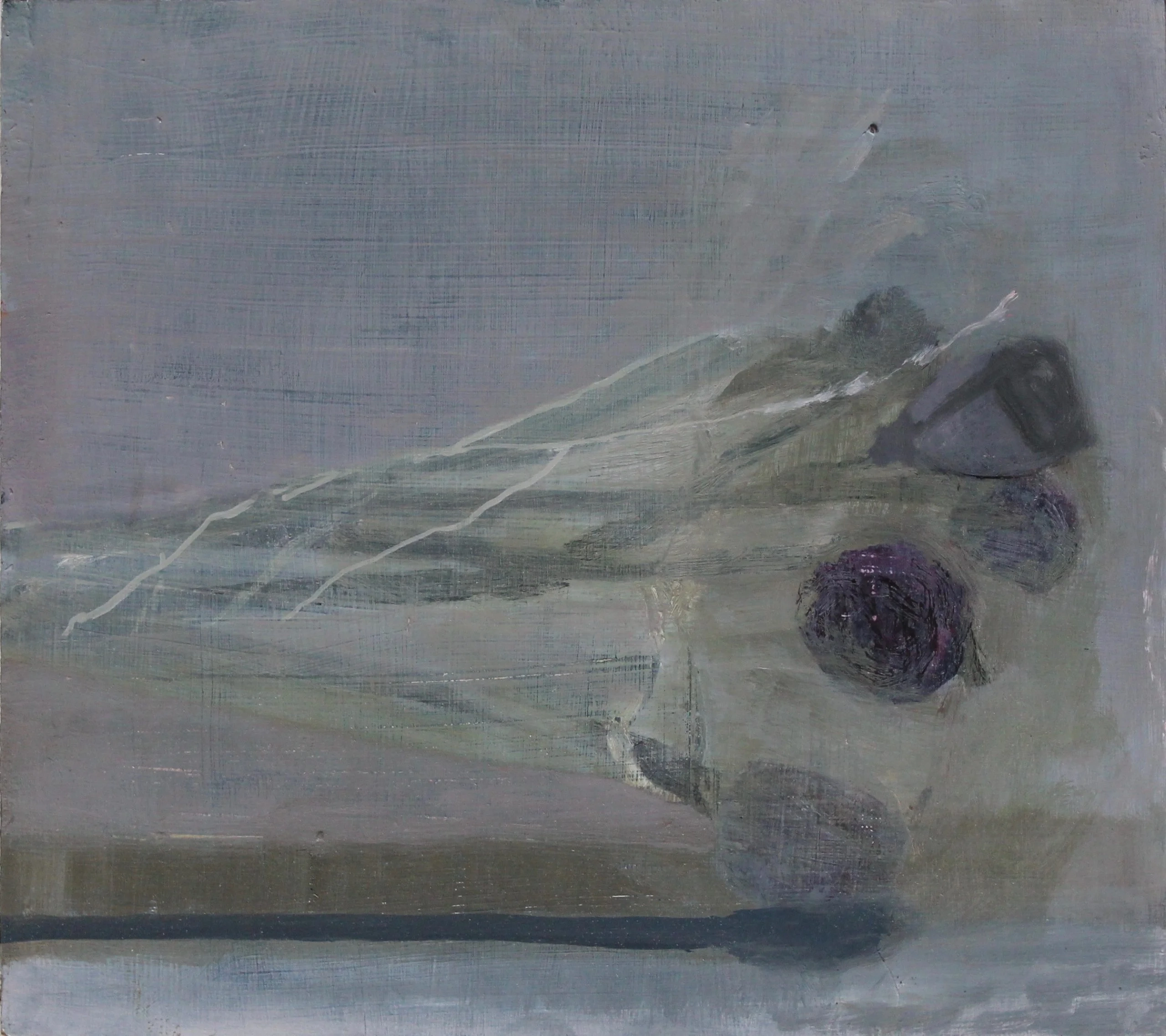
Aubrey Levinthal, Rose Bouquet, 10.75 X 12 in. oil on panel
Throughout her life, when Joan Mitchell referred to sunflowers in her paintings; she said of them, “They are like people to me.” In this large scale work on canvas, the paint vibrates, clings, dances and expands, allowing the forms in Sunflowers to come alive.
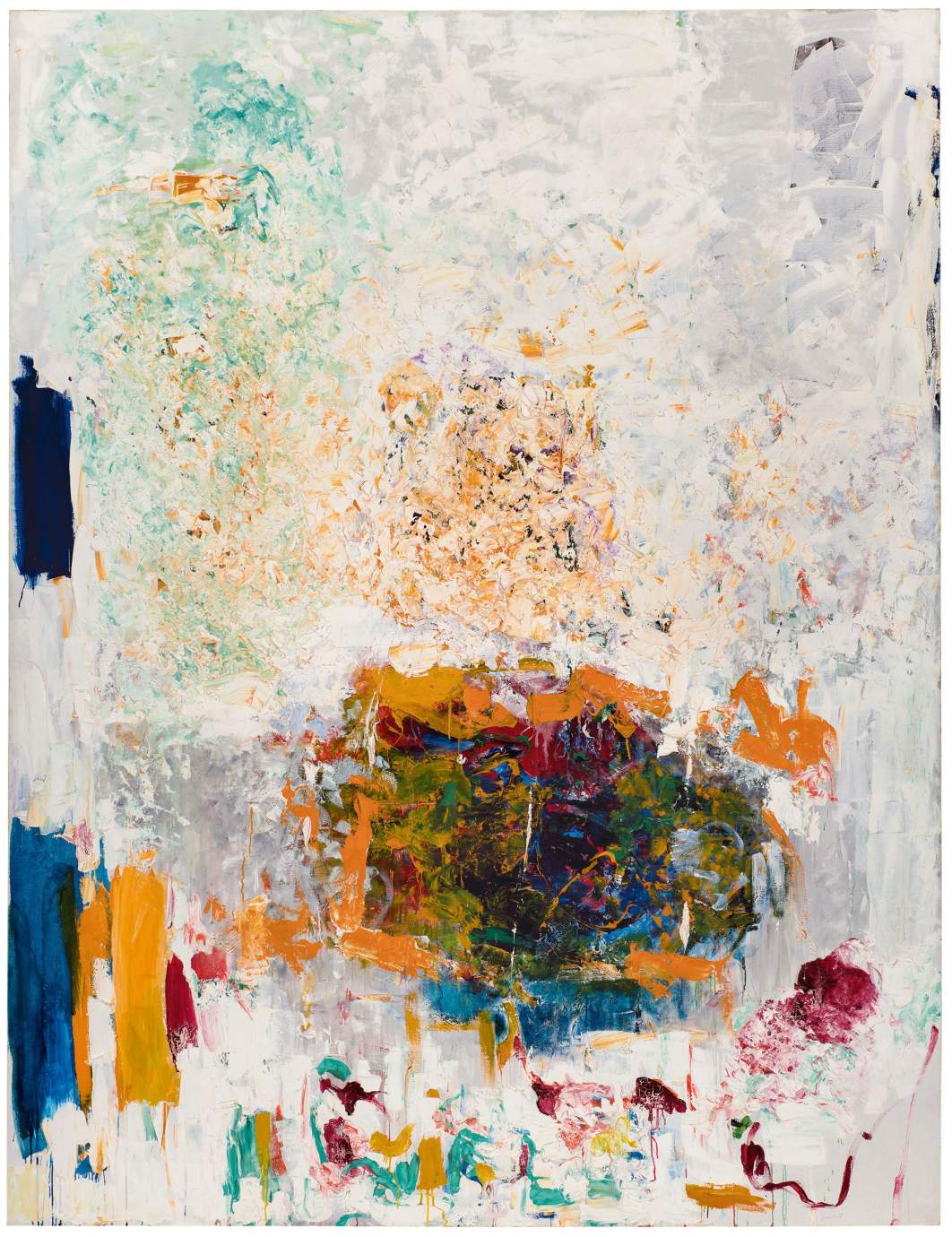
Joan Mitchell, Sunflower, 103 x 79 in. oil on canvas, 1970
“There is nothing more difficult for a truly creative painter than to paint a rose, because before he can do so he has first to forget all the roses that were ever painted.”
— Henri Matisse
Join my monthly newsletter and never miss a post
Each month I share explorations of master artists' works, elements of abstraction, and behind-the-scenes of my own painting journey, delivered to your inbox.