Dose of Beauty #7
Helen Frankenthaler & the Painter's Materials
There is a diverse group of paintings, sculptures and mixed media pieces that evoke in me a strong feeling of love. The response is not the same for each piece, but it is always love in some form, or a mixture of love, awe and desire. I thought I would share some of these with you over the coming months. Art to soothe the soul.
Not long ago, there was a study at the University of London, conducted by Semir Zeki, Professor of Neurobiology, who scanned the brains of volunteers while they viewed 28 works of art. He explained, “We wanted to see what happens in the brain when you look at beautiful paintings.” The experiment concluded that when you look at art, “whether it is a landscape, a still life, an abstract or a portrait—there is strong activity in that part of the brain related to pleasure.” When viewing art they considered most profound, the volunteers blood flow increased in a certain part of the brain by as much as 10%, which is the equivalent to gazing at someone you love.
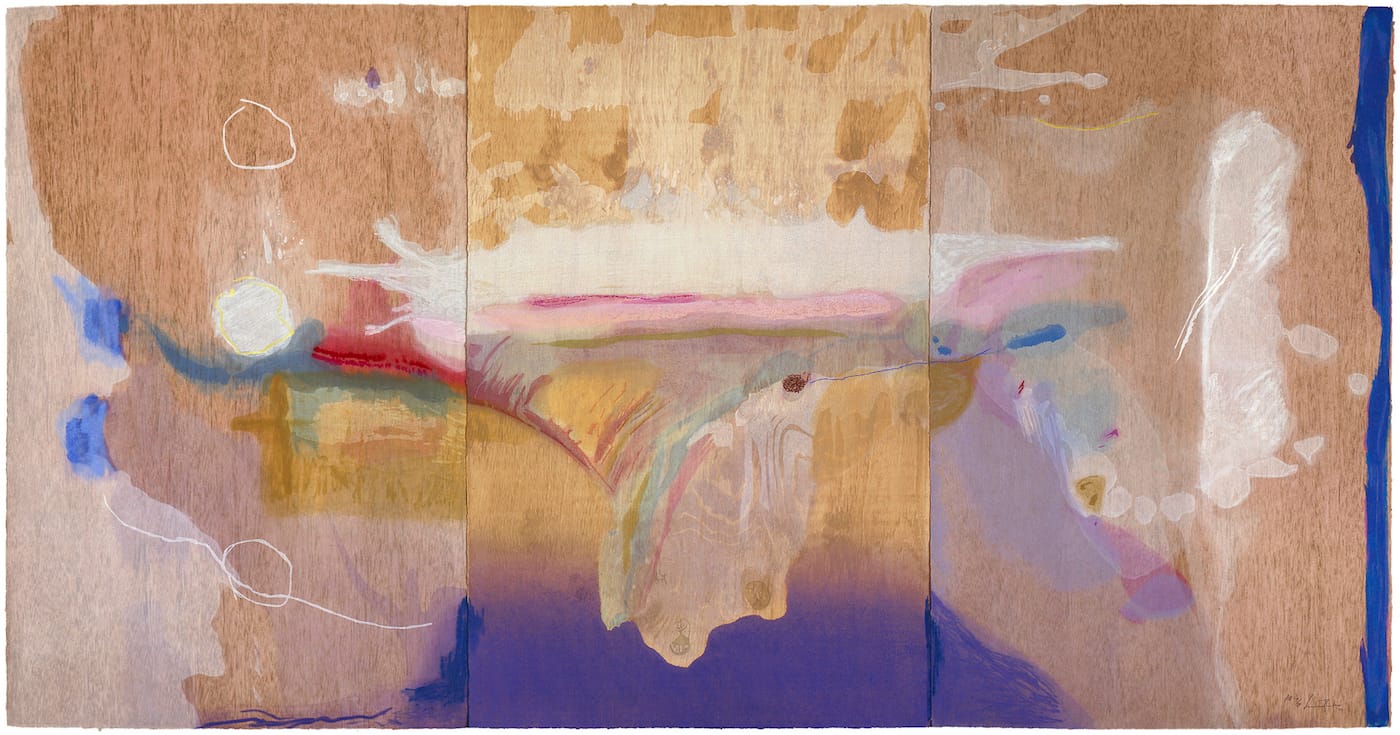
Helen Frankenthaler, “Madame Butterfly” (2000), 102-color woodcut from 46 woodblocks on three sheets of handmade paper, 41 3/4 x 79 1/2 inches. Helen Frankenthaler Foundation.
I was lucky enough to see "Madame Butterfly" in person at the Clark Museum in Williamstown, Massachusetts a few years ago. The Clark, fortunately, happens to be a scenic Sunday drive from my home studio. The exhibition, As In Nature, was open in the late summer of 2017. What a pleasure it was to see Helen Frankenthaler's work up close and personal. The piece above was especially sublime.
Madame Butterfly is a woodcut triptych printed in 2000, and is remarkably complex. It was Frankenthaler's last print in collaboration with master printer Kenneth Tyler, founder of the famed Tyler Graphics studio. With his technical supervision, the artist and the technicians used traditional Japanese ukiyo-e carving and registering techniques to print 102 colors on elegant sheets of handmade paper made exclusively for this edition.
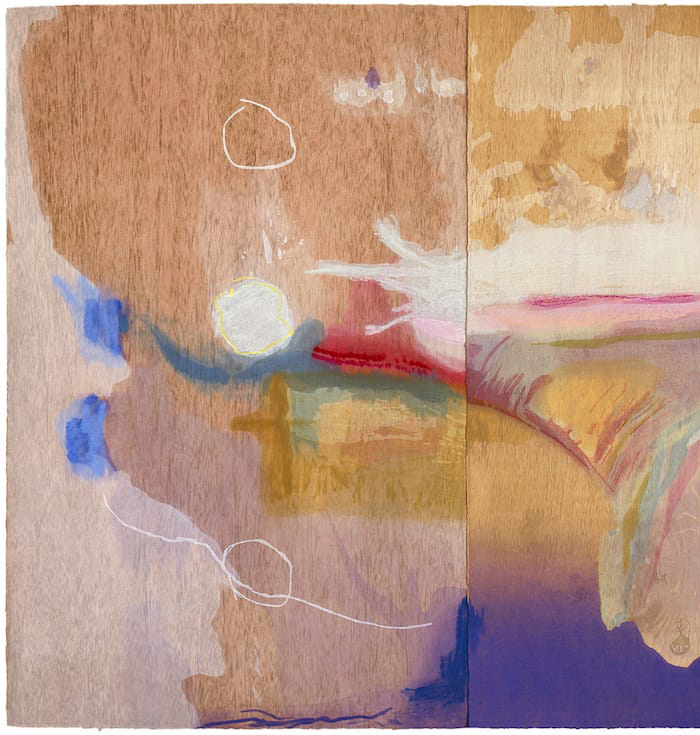
Detail Madame Butterfly
It's a masterpiece that looks spontaneous, but was an incredible technical innovation. Shining a luminous light, it appears ethereal with splashes of vibrant reds and blues. The ground, an earthy wood grain, is an unexpected raw material that supports the pooled and stained paint. The piece is serene, complex and layered, all at once!
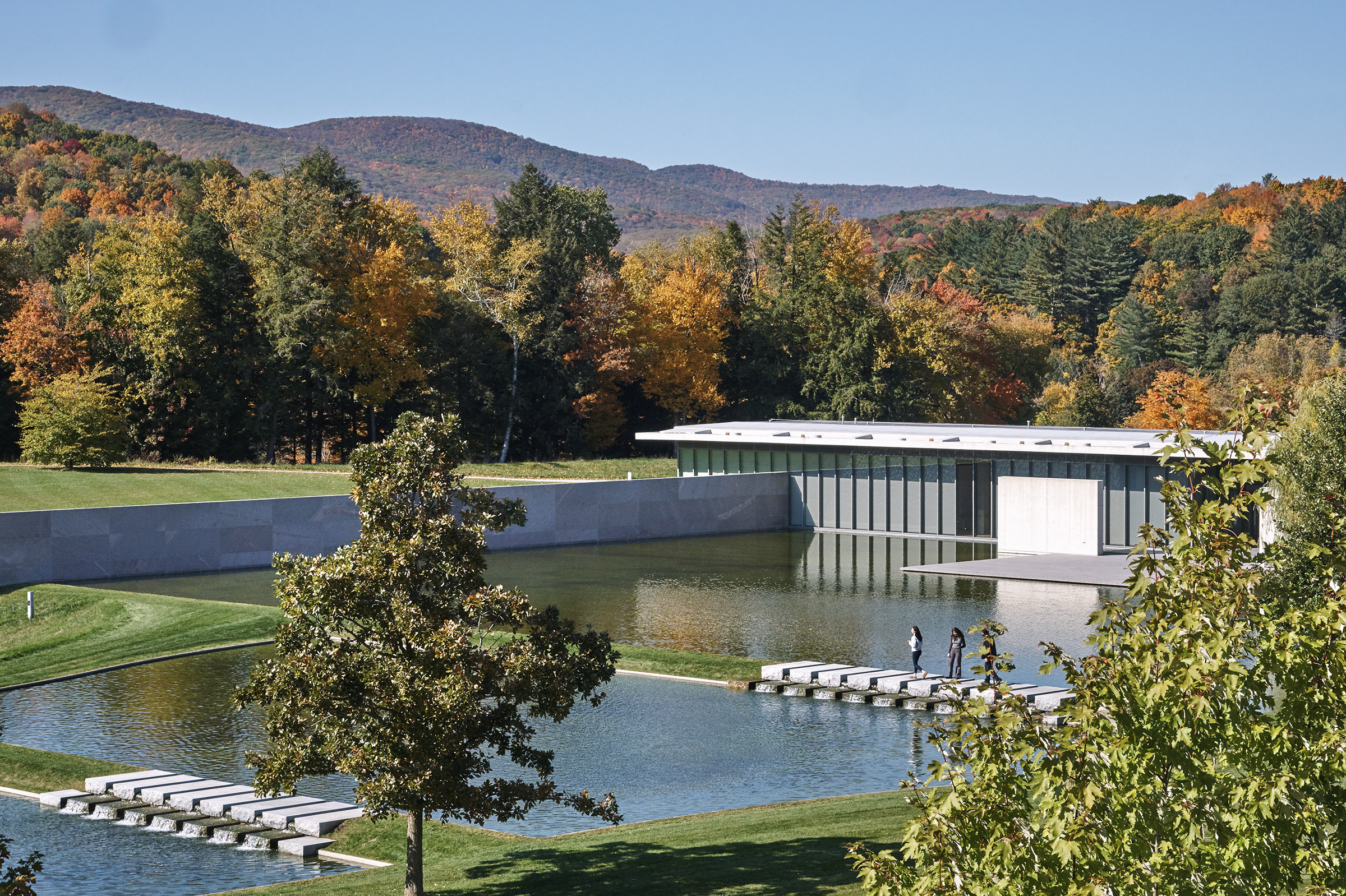
The Clark Museum in Williamstown, Massachusetts
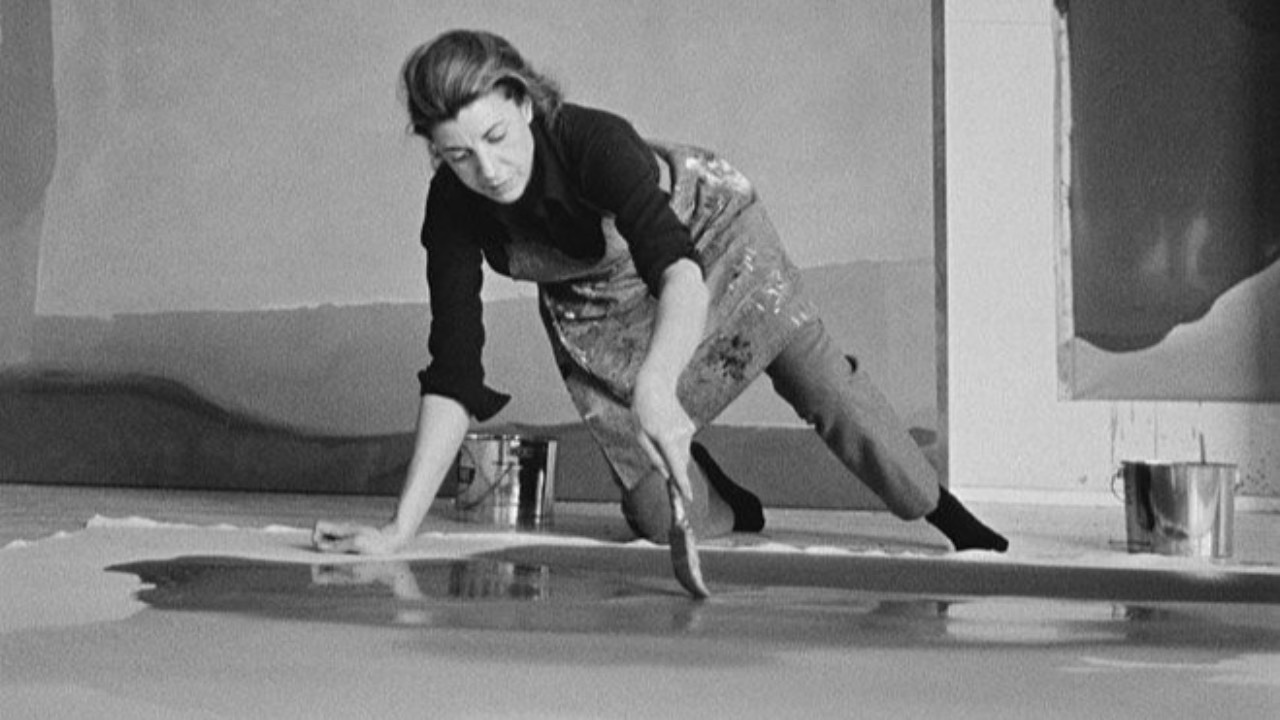
As a painter and arts educator, I've always been fascinated with the intimate relationship artists have with their materials. As we paint, we are falling in love with our materials over and over again. We ask questions of our paints and our tools, continuing to discover new ways to use them. This involves a physicality, the heightened attention we give to the pressure applied through our fingers, wrist and arm. Or how gently we might pull away our materials with a rag or a medium to get just the desired effect.
Over time we learn how our materials behave and how to manipulate them, while also allowing them a life of their own. Painting is a cooperative relationship that walks the fine line between control and surrender.
As modern day alchemists, artists work with a variety of viscous materials that we mix together, add mediums and then watch what happens. We create something out of nothing through a seemingly magical process.
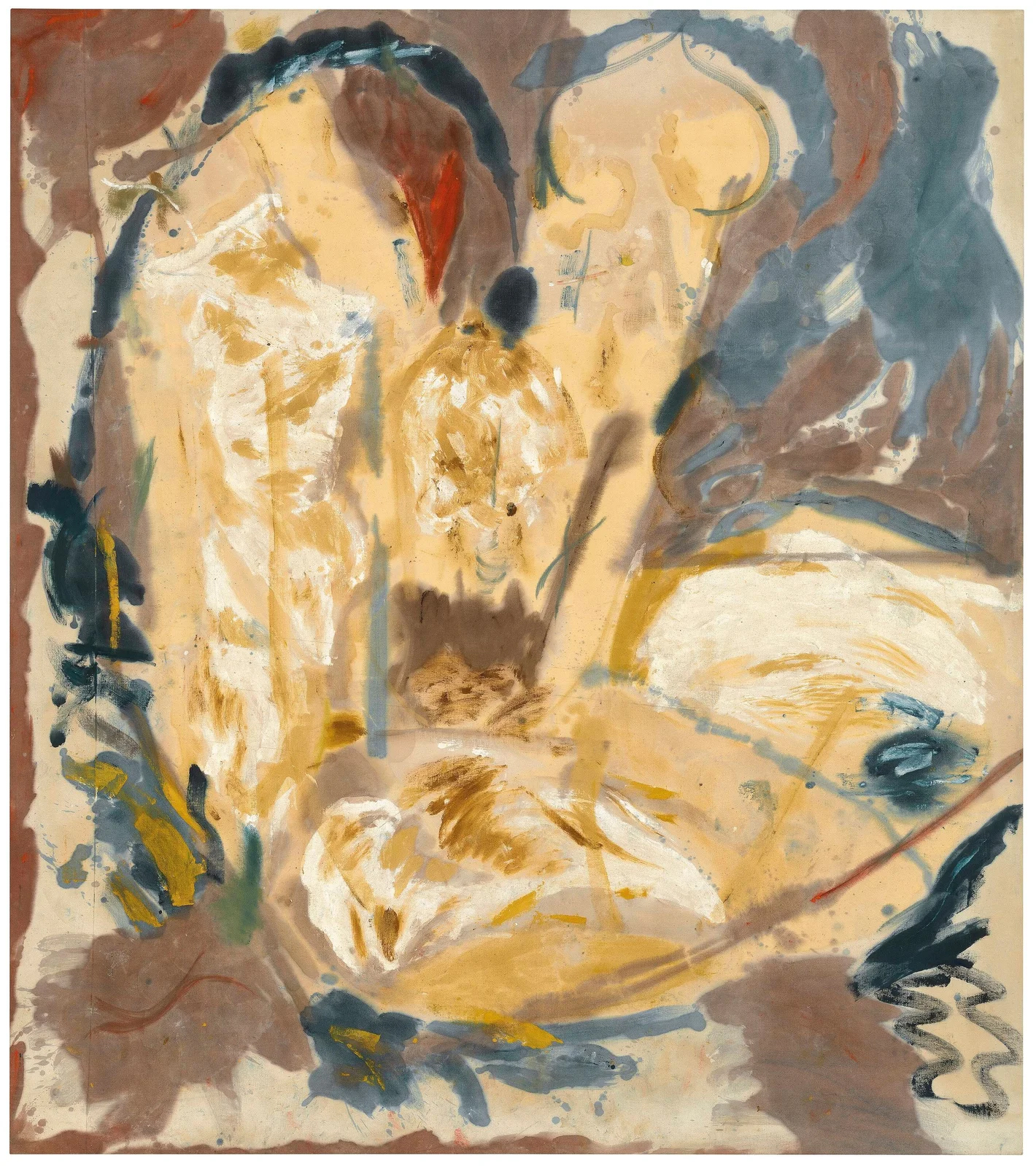
Giralda, 1956. Oil on unsized, unprimed canvas, 94 × 83 1/2 in
Another masterpiece in the As In Nature show was Giralda, a large oil painting on unprimed canvas. Created with Frankenthaler's signature soak-stain technique, in which she applied washes of thinned paint to unprimed canvas. This application created vivid, flowing blocks of color using oil pigments, with turpentine, allowing the paint to soak the raw canvas with colors as they mixed and to interact in unexpected ways.
I love the very loosely organized composition. A combination of happenstance and gently guided materials. The colors run together and coalesce, faded in some places, saturated in others. Imagine the restraint needed, as Frankethaler stated "where to leave it, where to fill it, where to say, this doesn't need another line or another pail of color."
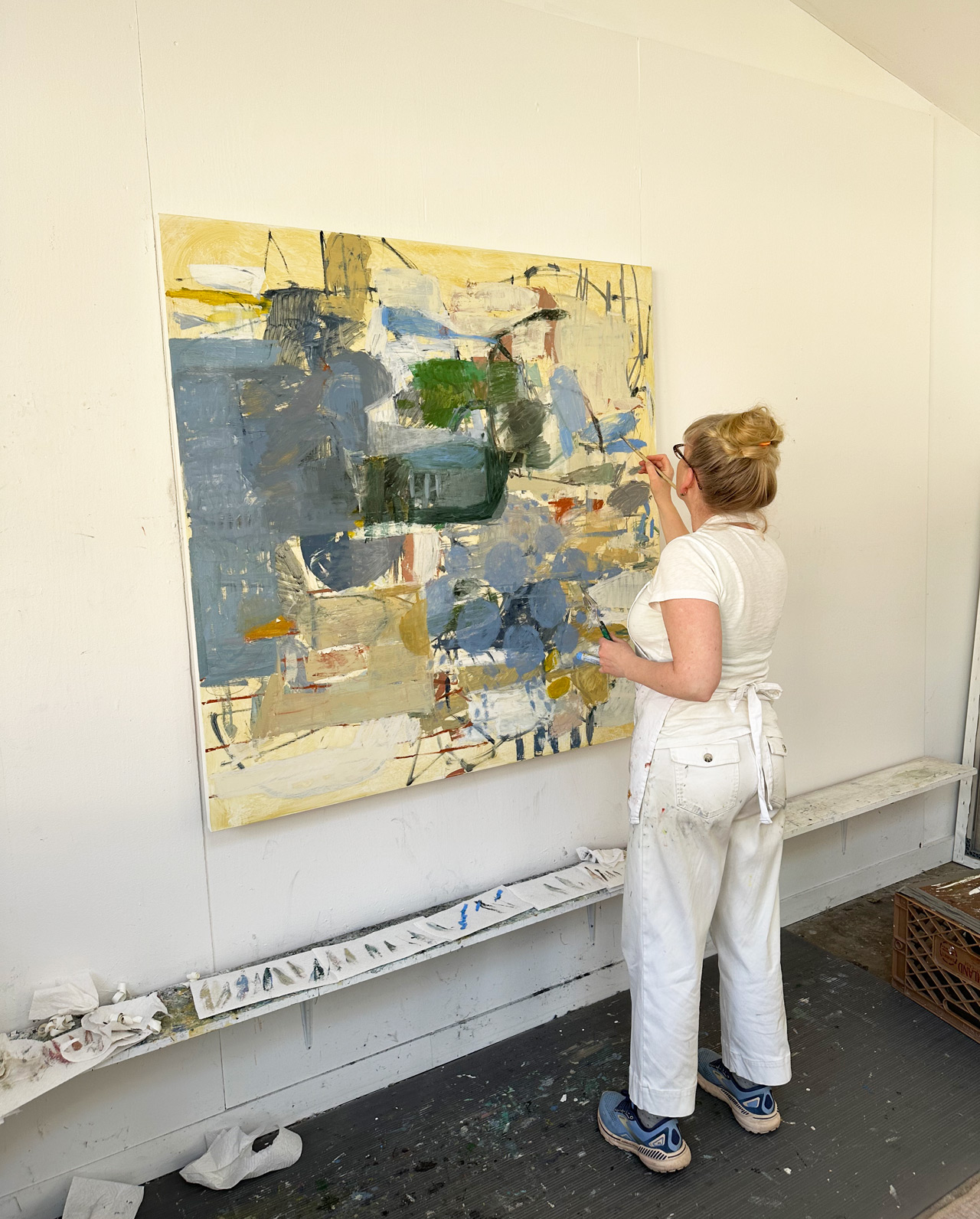
Work in progress in the studio.
When I first started painting, there were many things that I could not achieve in my work. I struggled with transparencies, complex layering, or the constructing of more sophisticated organic shapes. I spent years trying to achieve a feeling of depth and space in my work through color, contrast and paint applications. The process is never linear and can't be rushed, but so many years later I am still utterly wooed by my materials.
One of my favorite descriptions of the painting process is from James Elkins book, What Painting Is: "Painting is scratching, scraping, waving, jabbing, pushing, and dragging. At times the hand moves as if it were writing, but in paint; and other times it moves as if the linen canvas were a linen shirt, and the paint was a stain that had to be rubbed under running water. Some painting motions are like conversations, where the hands keep turning in the air to make a point. Others are slow careful gestures, like touching someone's eye to remove a fleck of dirt."
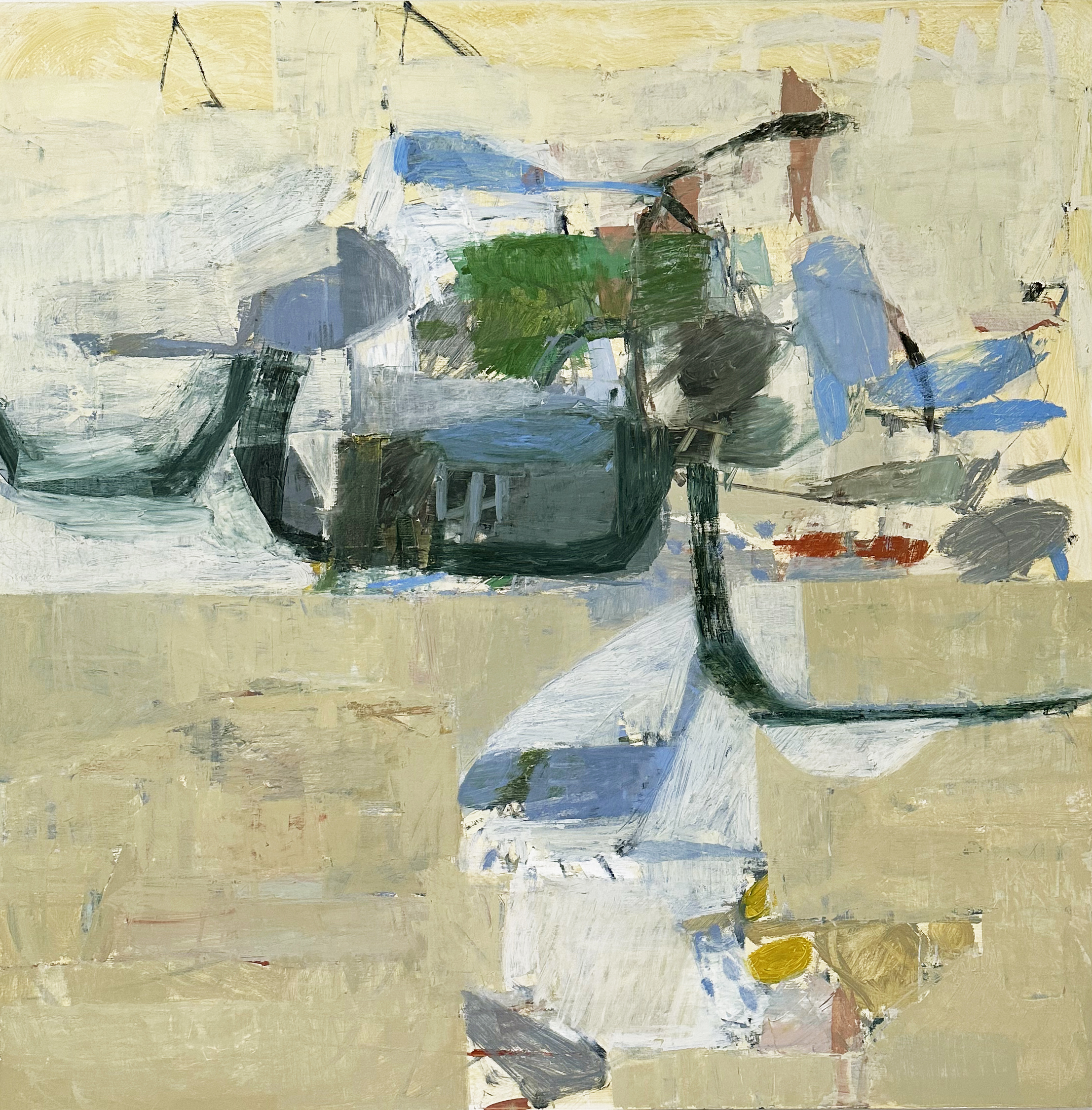
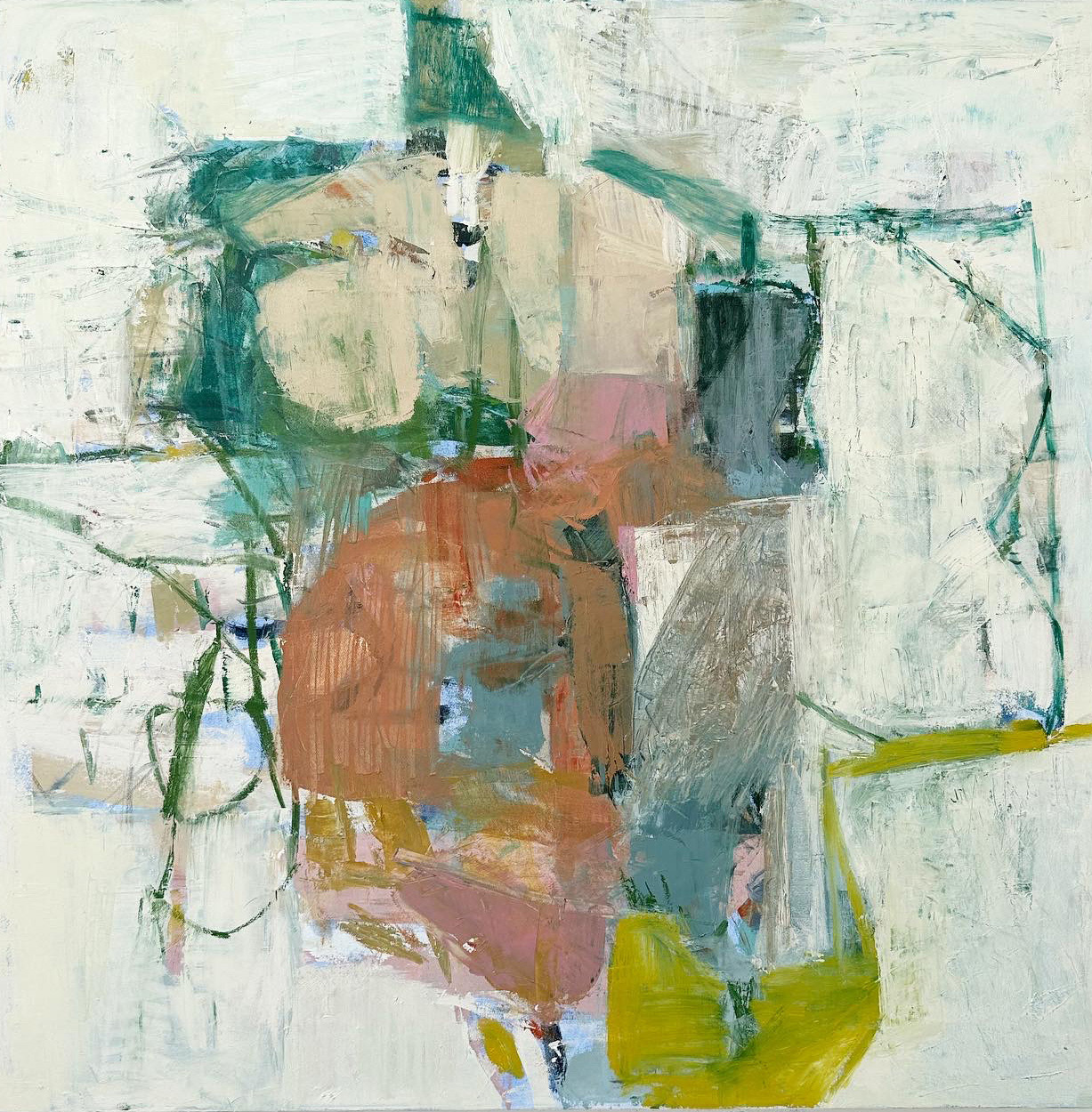
Garden Party #3, oil on linen, 48x48. 2026
Join my monthly newsletter and never miss a post
Each month I share explorations of master artists' works, elements of abstraction, and behind-the-scenes of my own painting journey, delivered to your inbox.